By Gary Burns
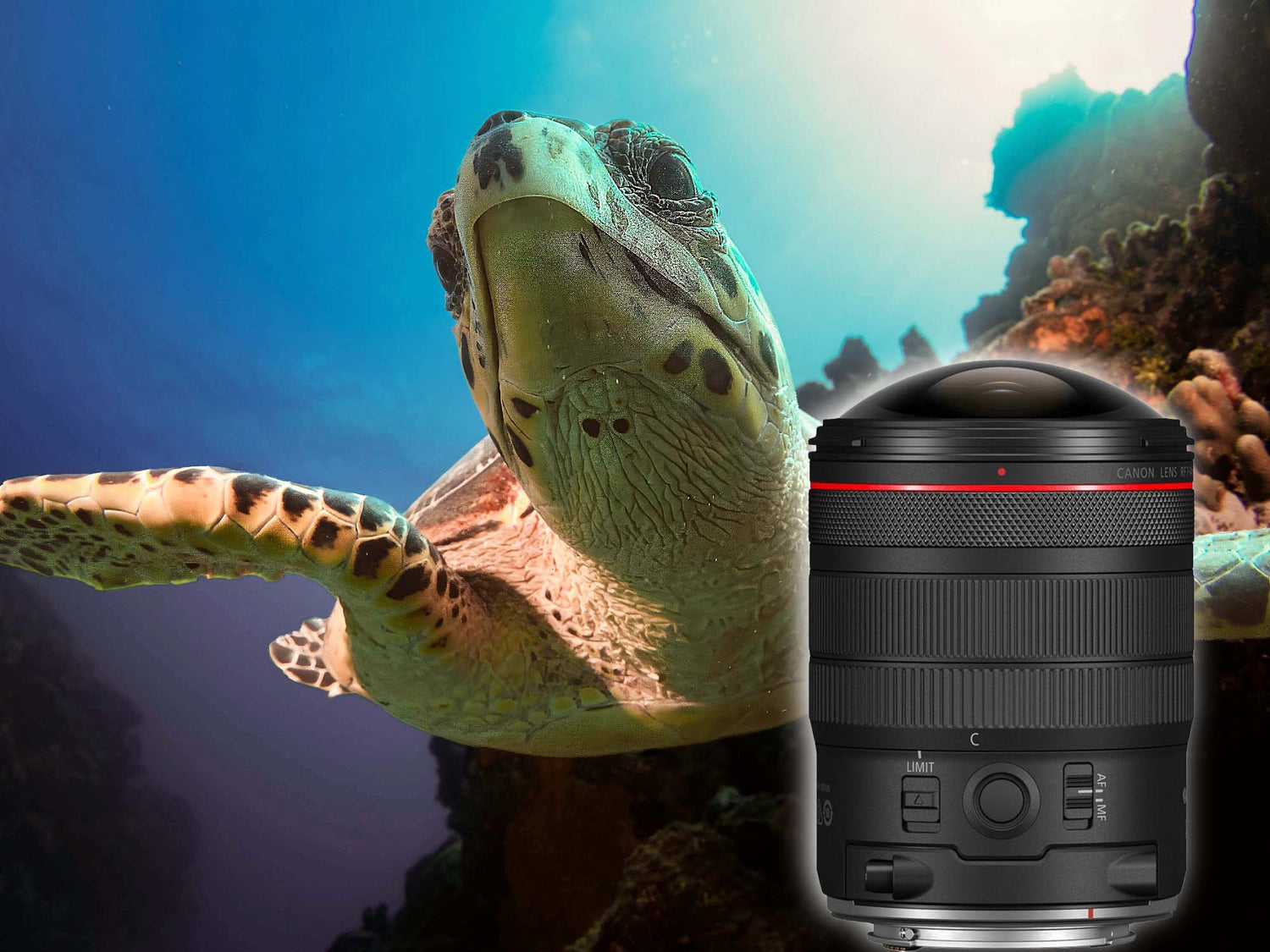
During a recent trip to Grand Cayman with the Ikelite dive team, I had the opportunity to experiment with the new Canon RF 7-14mm ultra-wide-angle fisheye lens.
This lens stayed on my camera for pretty much the entire week as we dove from the Epic Divers charter boat all along Seven Mile Beach from the Kittiwake wreck to the North Wall and Stingray City. We spent our afternoons shore diving from Macabuca which is an easy site with plenty to see. Conditions were ideal with water temperatures in the mid-80sºF (~29ºC) with good visibility.
The Macabuca site provides a wealth of marine creatures to capture images of octopus, moray eels, sharks, turtles, and large tarpon. If you plan to visit Grand Cayman, the Macabuca site caters for all levels of diving skills, with a local dive store on site that can supply all required equipment.

© Gary Burns
Versatility of the Canon RF 7-14mm Lens
The new Canon lens offering delivers a unique perspective for creative close-up action imagery with distinctive distortion, hosting a 190º circular fisheye view at the 7mm focal length setting. This type of lens is ideal for creative photographers for close-up action and dramatic angles of the local environment and marine life. We set our dive profile to investigate the performance of the new lens in close-up and in wide-angle situations to illustrate normal and macro photography.

As an example of the close-up capability of the lens, I encountered a bristle worm on one of the support gantries of the Kittywake wreck, the resulting image shown above illustrates the close-up lens performance. © Gary Burns

Kittiwake Wreck © Gary Burns

The camera settings for this image were set to 14mm • 1/160 • f/11 • ISO 100 which are the same settings as used for the bristle worm image illustrating the versatility of the lens' capabilities. © Gary Burns
Required Equipment
The Canon EOS R-series cameras with the new Canon 7-14mm fisheye lens can be fitted directly into the Ikelite housing from the rear port of the housing. This makes camera and lens assembly quicker than the standard front mount lens installation.
The Ikelite DL 28mm Port Extension is required with the compact or large dome port
fitted to the housing. The Zoom/Focus Gear is also required based on the lens geometry so that the zoom feature of the lens can be utilized. These photos were taken with the Compact 8" Dome Port, which I find to be easier to travel and swim with. The optical characteristics of the fisheye lens provide sharp corners even with this smaller low volume dome.
My own camera housing setup utilizes the optical sync cord dual strobe arrangement, which worked seamlessly with the new lens and the R5 camera.

Just a note of caution, do not interfere with the turtles’ natural behaviors underwater, keep a safe distance. But, you need to be relatively close using an ultra-wide-angle lens, to achieve a shot like this one. © Gary Burns
Lens Comparisons
I currently own the Canon EF 8-15mm wide-angle lens. This lens requires the Canon RF to EF Adapter and also the 50mm port extension with the dome port. Over several years, I have used the 8-15mm lens in the kelp waters of California's Channel Islands. The resulting images have been excellent. However, the new Canon RF 7-14mm lens, subjectively provides a much sharper, higher quality image, based on my testing experience.

Image shot with the Canon RF 7-14mm fisheye lens. © Gary Burns
For general diving my “go-to” lens of choice for the past few years has been the Canon RF 14-35mm lens combined with the Canon EOS R5 camera body. This, based on my experience, is an all-purpose lens, which I would recommend to any of my diving colleagues. The zoom features of the lens and optical clarity are excellent, as can be seen in the image of the moray eel below.

Moray eel image shot with the Canon RF 14-35mm lens. © Gary Burns
Settings for the Canon RF 7-14mm Fisheye Lens
When using an ultra-wide-angle lens, you are required by definition to be closer to your subject, which encourages you to rethink your composition, due to the distortion of the lens. The Canon 7-14mm provides an extremely high-quality sharp image. During our investigation I found that the ideal baseline camera settings prior to the dive of 1/160 • f/8-f/11 • ISO 100 worked very well.
The light spectrum feature within the camera helps to find the appropriate exposure during shooting, so that aperture, and if required the ISO, settings can be manipulated to provide the best exposed image.

One of my favorite shots during our adventure was the close up of this horn-billed turtle shot. This particular turtle was very inquisitive of the camera housing, I believe that she could probably see her own reflection in the dome port. © Gary Burns
Strobe Placement
Strobe placement is very important, as the strobes can potentially be seen in your image at the 7mm setting. Plan adjusting your composition and strobe positions, as there is a possibility that you will include your strobes in the captured image and also the output strobe lighting in the final image.

© Gary Burns
This is a characteristic of shooting images with an ultra-wide-angle lenses, however, I found by careful composition and shooting at 14mm, this reduces the impact of the strobes being seen in the image and also reducing the lighting back scatter. The majority of images I shot were taken at the 14mm lens during our trials.

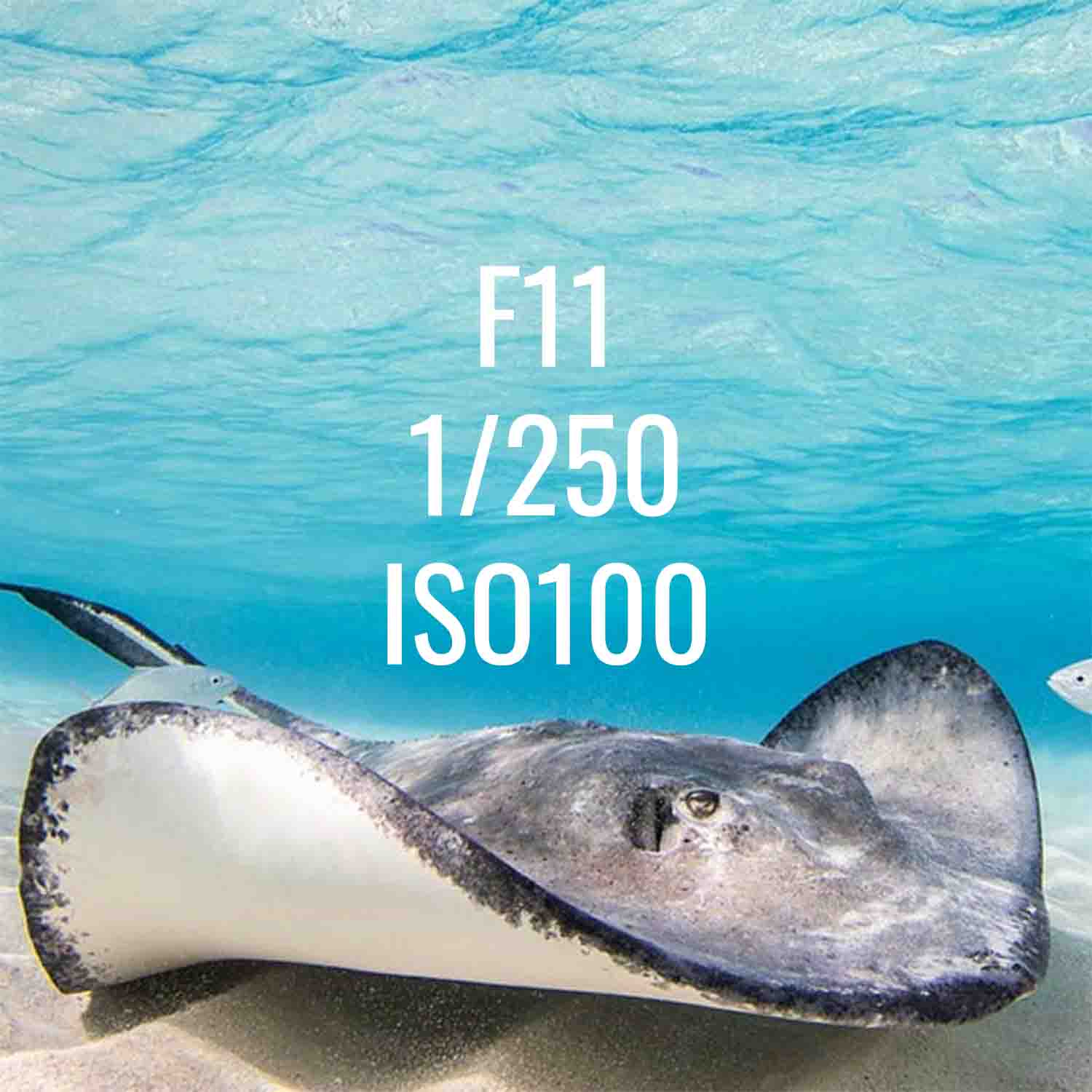
The image of the Caribbean sting ray was taken close to the propeller of the wreck of the Kittiwake. The 14mm setting was employed, with both strobes turned outwards, so that the two flash beams overlapped in the center of the images to emphasize the subject. © Gary Burns

Even during our deeper wreck dives, the lens provided excellent performance utilizing the available light. The strobes provided the “fill in” light of the yellow tail fish on the wreck as cab be seen in this image. © Gary Burns
Solutions for Lens Distortion
Lens distortion can be adjusted in post processing within in Adobe CS6 and Lightroom, by removing the check mark in the Camera RAW setting “Use Profile Corrections”. If you don’t remove this setting, I have observed that the image appears significantly distorted.
The “user profile” lens correction is switched on by default. To date, I haven’t found a way to remove this feature, except if you manually remove the tick in the application box under the “optics window” then the lens distortion is removed.

This image above was the first shot I took using the 7-14mm lens. This grouper was very stationary and seem to enjoy modeling for the shot. As you can witness, the lens distortion at 14mm is minimal at the edges of the frame, with a sharp subject. The image is directly from the R5 camera without any edited features. © Gary Burns

© Gary Burns
Final Thoughts
As you can see, the new Canon 7-14mm lens provides excellent color definition and sharpness. After using the 7-14mm lens everyday for over a week with only using minor post-image processing editing within Photoshop CS6, the results achieved are unique. For the future, I will definitely plan to up-date my current 8-15mm lens to the new Canon RF 7-14mm wide-angle lens offering.

© Gary Burns
Equipment Used
- Canon R5 Mirrorless Camera
- 200DL Underwater Housing for Canon R5 Deluxe Version # 71764-DLX
- Canon RF 7-14mm Fisheye Lens
- DL Compact 8 inch Dome Port # 75344
- DL 28mm Port Extension # 75028
- Zoom/Focus Gear # 5509.62
- RC165 TTL Underwater Strobe [Fiber Optic] # 40116
Additional Viewing
Finally a New Fisheye for Underwater! // Introduction the Canon RF 7-14mm Lens [VIDEO]
Incredible Encounters: Photographing Hawksbill Turtles in Grand Cayman
Canon RF 7-14mm Fisheye FIRST RESULTS Underwater Photos & 4K Video [VIDEO]
Upgrading to Fiber Optic TTL // Shooting the Canon R5 with Ecko Fiber and RC165 Strobes
Was it Worth Is? Gary Burns on Upgrading to the Canon R5 [VIDEO]
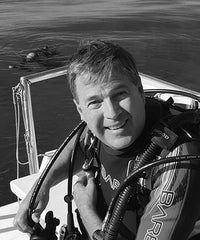 Ambassador Gary Burns is an underwater photographer and Senior Engineering Fellow at Safran Engines in France. His work discipline has taken him from his homeland of the UK to Canada and the USA to work with leading aerospace engineering teams, developing corporate aircraft, cabin interiors, and state of the art aircraft engine power plants. During his working career he was involved in development flight testing, which is very much like scuba diving. The discipline requires very dedicated rules, which provides unique personal experiences that drives curiosity, a sense of adventure and creativity. Since then his professional aerospace career has taken him to Southern California where he dove on a regular basis in the Channel Islands off Santa Barbara and Catalina. The protected dive sanctuaries and Pacific Ocean kelp forests provide the chance to sharpen photography skills from wide-angle to close-up macro with a wealth of sea life and sunlight beaming through kelp. Read more...
![Canon RF 20-50mm PZ FIRST RESULTS // Underwater with the R6 V & R6 III [VIDEO]](http://www.ikelite.com/cdn/shop/articles/Canon-RF-20-50mm-PZ-blog-cover_bb09f07a-b601-4191-b445-a5e3e44bceb3.jpg?v=1787321518&width=2000)