I first began diving through research, not photography. My entry into the underwater world came via aquaculture and scientific diving, where the focus was observation, data, and precision rather than art. In college, I enrolled in a research diving course led by an anthropologist, which took us to Belize to map centuries-old shipwrecks. We documented the remnants of multiple wrecks: their weathered wooden structures, sunken cannons, and massive anchors slowly being reclaimed by the reef.
"Freediving gave me unlimited access; any coastline, any weekend, no tanks required. It also allows you to get closer to certain subjects, uncovering new compositions, better lighting, and even individual personalities to revisit."

We got extremely lucky this day. © Michael Corso
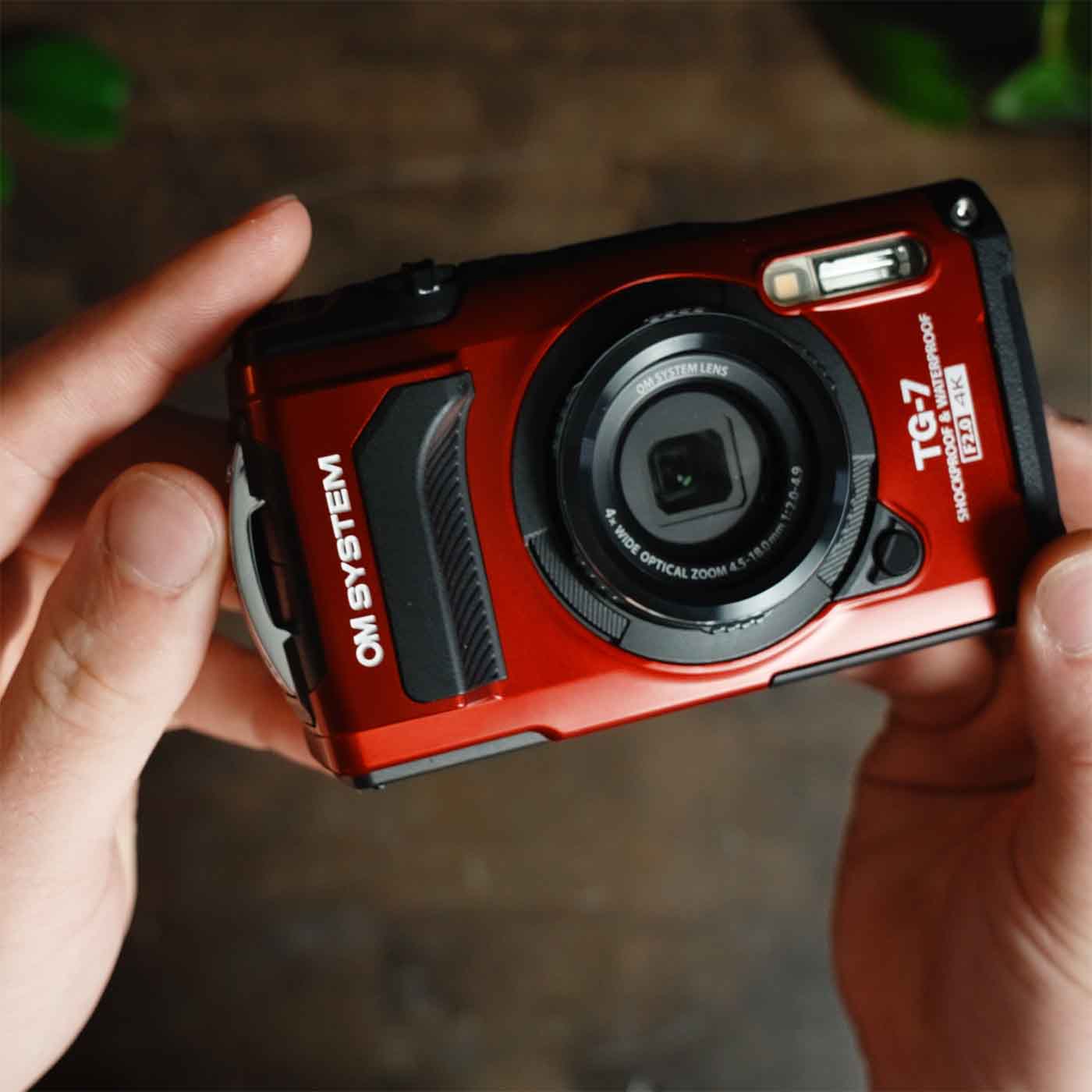
While I was there to advance professional skills, what truly hooked me was a small OM System TG camera. Using it for photogrammetry mapping, I found myself wanting to dive purely for the purpose of taking photos.
That curiosity quickly turned into obsession. I spent hours watching and learning from photographers like Alex Mustard, Paul Nicklen, and Laurent Ballesta. Through their work, I began to understand both the artistry and the technical craft behind underwater imagery. I also started discovering equipment brands, and Ikelite consistently stood out, not just as an affordable, high-quality option, but as a company that invested in education and consistently produced content that was both informative and inspiring.
"My Ikelite housing has been there for some of my most meaningful memories. It has enabled exploration and creativity."

A Moray telling me to keep my distance... I obliged. © Michael Corso
Around that same time I met my girlfriend, a marine biologist. I showed her some of my early underwater photos, and apparently, they were compelling enough to earn me a first date. Six months later, we found ourselves in Umkomaas, South Africa, photographing together while surrounded by blacktip sharks at Aliwal Shoal.

I wanted to include a shot from my trip to South Africa. I love the mood all the backscatter gives. ©Michael Corso // Learn more: 4 Creative Uses for Backscatter in Underwater Images.
After graduating from school in the North East, I needed to explore a tropical environment that would let me create the visual art I wanted. When a work opportunity arose on the Big Island of Hawaiʻi, I didn’t hesitate. There, I had to choose between buying scuba equipment or a camera setup... I learned how to freedive. This is where the lightweight and compact DLM system, paired with the Sony a7CR and tiny Tokina Fisheye, really shines.

Frogfish love the harbor for some reason. © Michael Corso

A small group of Rough-Toothed Dolphins whizzed by to check us out. © Michael Corso
While I still love scuba diving, freediving gave me unlimited access; any coastline, any weekend, no tanks required. It also allows you to get closer to certain subjects, uncovering new compositions, better lighting, and even individual personalities to revisit. Most of the images in my portfolio were taken on breath-hold dives, exploring Hawaiʻi’s reefs at my own pace.
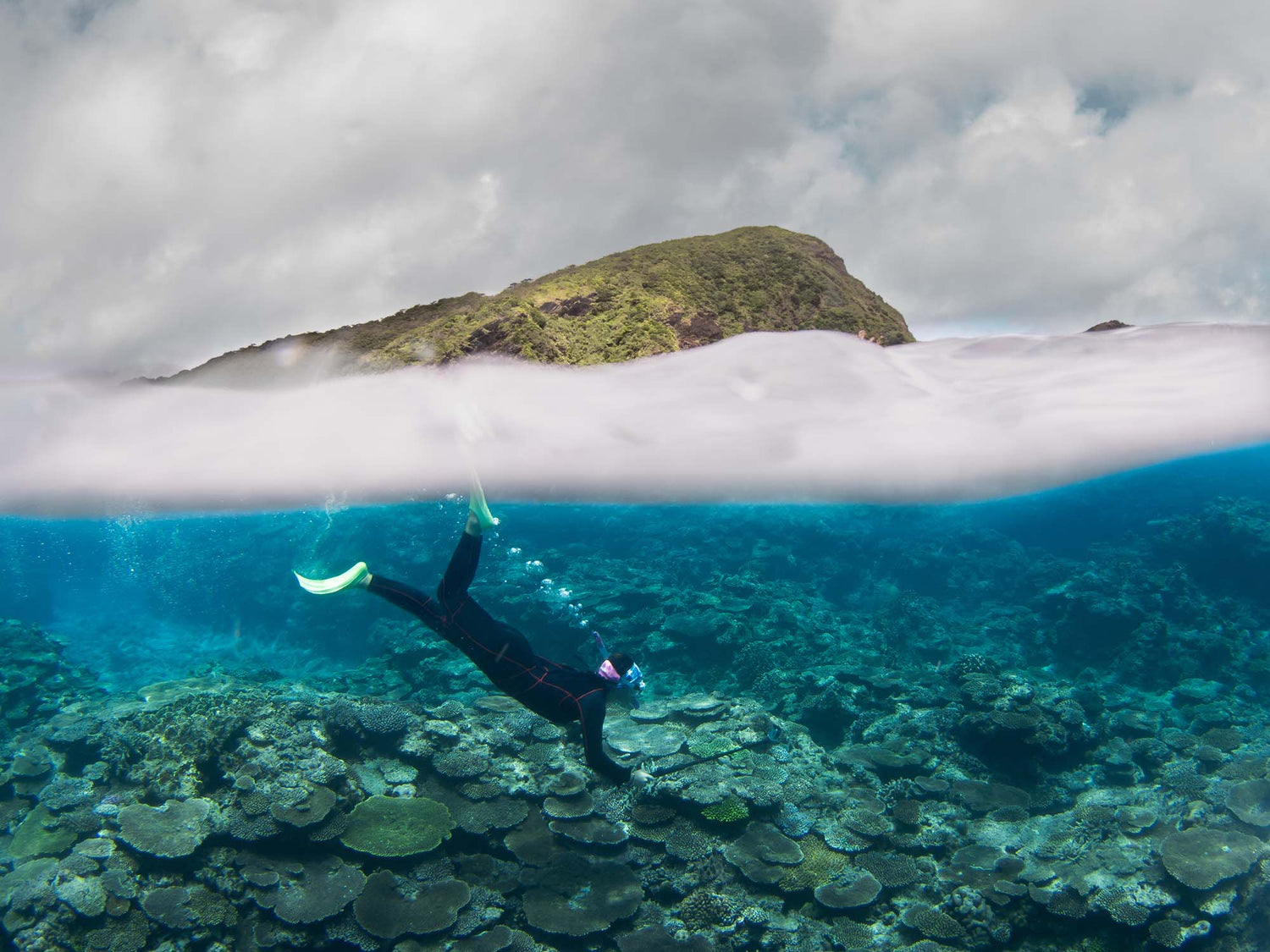
Saving money on scuba and relocating to the middle of the Pacific also opened the door to further travel. Last May, my girlfriend and I traveled west to Okinawa, where we experienced a level of underwater biodiversity I had only seen in my dreams.

This Japanese reef had some serious bleaching. Here's two Tomato Clowns we found. Hoping their anemone recovered. © Michael Corso
Photography has since become a way of preserving those moments. I love creating prints for our home and for friends and family. My goal has never been perfection, but progress: continuing to learn, refining my eye, and seeing where this hobby takes us next.

This shot was made at a secret night snorkel spot some local friends told us about. We swam out with our dive lights and our fingers crossed. Our dive lights attracted clouds of planktonic life, which attracted the resident mantas to feed directly under us. This is my favorite picture thus far. © Michael Corso
Additional Viewing
Choosing an Underwater Housing for the Sony a7C II or a7CR
Wide Angle Showdown: Canon RF-S 10-18mm vs Tokina 10-17mm Underwater
Clowning Around | Shooting the Anemonefish Circus
Tips for Shooting Split Shots with Your Underwater Housing [VIDEO]
5 Tips for a Successful Freediving Photoshoot

Michael Corso is currently studying to receive a graduate's degree while continuing to plan underwater adventures that both excite him and enhance his photography skills. Michael currently shoots with the Sony a7CR inside the compact 200DLM Underwater Housing. Find out where Michael is diving next and join him on his underwater photography journey by following him on Instagram @mcaquaculture or visit his website.