
By Douglas Klug
The Kona coast along the island of Hawaii is a great diving destination for US divers wanting a quick and simple trip. Flights from the US west coast are relatively short, the water is warm and clear, and there are some amazing marine life encounters to be had just a few kicks off the coast.
Known as “The Big Island” in the Hawaiian chain, the Kona coast of Hawaii is actually along the leeward western side of the island, where it’s largely protected from the prevailing winds across the South Pacific Ocean. Kona’s shoreline drops off quickly into thousands of feet of water, which can bring exciting pelagic encounters close to shore. Divers who visit this area can choose from a number dive shops and tour operators for boat diving excursions, or simply rent gear and shore dive at their own pace.
On a recent trip to Kona, I had a list of marine life I was looking for, an underwater camera to capture images, and a week of diving to do it. Here’s how my underwater shooting around the Kona coast worked out!

Hawaiian Day Octopus © Douglas Klug
Manta Rays
The Kona coast is home to one the diving industries most famous dives: the Manta Ray night dive. Every night of the week, divers and snorkelers are treated an incredible show from Kona’s healthy population of reef Manta Rays. Operators set up light arrays, which attract plankton, which in turn attracts the stars of the show.
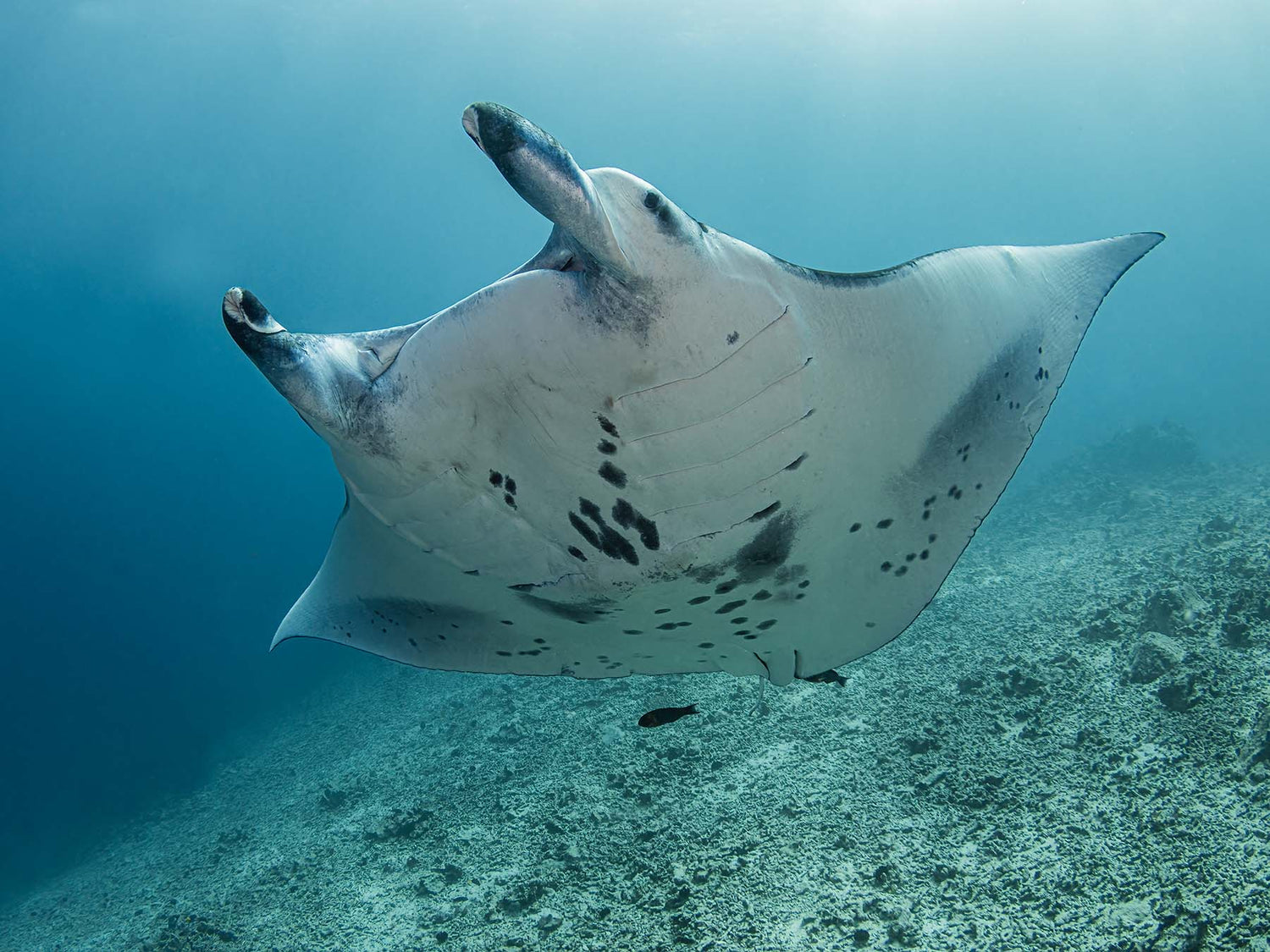
Rather than diving in the dark, I had other plans for my own manta ray encounters. The same areas where the night dives are carried out also host manta ray cleaning stations that can be visited during the daytime. With a little effort, a shore dive can lead some incredible daytime encounters. The manta ray cleaning stations provide a great area for divers to observe the interactions between the giant graceful mantas and the tiny saddle wrasse, a prolific cleaning wrasse on Hawaiian reefs.

"The manta ray cleaning stations provide a great area for divers to observe the interactions between the giant graceful mantas and the tiny saddle wrasse."
Interestingly, manta rays have unique spot patterns that allows them to be identified as individuals. The Manta Pacific Research Foundation is a non-profit that maintains website with identification photos. The beauty I encountered and photographed this trip was identified as “Big Bertha,” one of the oldest and longest sighted manta rays off Kona. She was first photographed and identified by divers in the early 1990’s, meaning she’s more than 30 years old!
Bait Balls
Along with the manta rays, the nearshore reefs can host massive schools of bigeye scad, known locally as akule. Even when the manta rays can’t be found, these giant flowing balls of silver fish can make for an incredible encounter.

Massive bait ball © Douglas Klug
This bait ball stretched from about 60 feet (18 meters) in the sand almost all the way to the surface.
Blue Water Sharks
The deep waters off the Kona coast support a healthy ecosystem, and a healthy ocean ecosystem includes sharks. On the Kona Coast, there are several operators who will take divers out for an “ocean safari” in search of sharks or other pelagic encounters. I spent a day on the sea, hovering over 6000 feet (1828 meters) of water where we encountered and photographed oceanic white-tip sharks. These are powerful predatory sharks that should not be taken lightly. Despite social media making them look tame, divers should never enter the water with these sharks without the assistance of a properly trained guide.

Ocean white-tip shark and pilot fish © Douglas Klug
"Oceanic White tip sharks with their symbiotic pilot fish in the deep blue waters off the Kona Coast."
Hawaiian Day Octopus
Kona has a healthy population of Hawaiian Day Octopus, or Tako. Without much trouble, I found a number of them crawling around on reefs, or hiding in holes. With a bit of patience, they’re highly approachable and a great photo subject for close-focus wide-angle shooting.

Hawaiian Day Octopus © Douglas Klug
"With a bit of patience, [octopus] are highly approachable and a great photo subject for close-focus wide-angle shooting."
Commerson’s Frogfish
The Commerson’s Frogfish are common along the Kona coast, but their ability to blend in with the reef makes them hard to find. As frogfish go, these master’s of camouflage are huge, but they still do such a great job hiding that they’re often overlooked. They’re so confident in their camouflage that when I do find one, I usually have time to set up some close-focus wide-angle shooting.

Frogfish © Douglas Klug
"[Frogfish] are so confident in their camouflage that when I do find one, I usually have time to set up some close-focus wide-angle shooting."
Green Turtle Cleaning Stations
While the Hawaiian islands have a healthy population of green sea turtles, the Kona coast of the big island doesn’t have as many as islands like Maui. What the Kona coast does have, however, are some reliable cleaning stations where divers can observe green sea turtles being cleaned by brilliantly colored yellow tangs. By quietly approaching these areas and observing, nature carries out its daily duties and affords some fantastic photographic opportunities.

Green sea turtle and yellow tang fish © Douglas Klug
Fish Schools
The reefs along the Kona coast are some of the healthiest in the Hawaiian islands. Strong ocean currents provide nutrients creating a food web for reef fish. Even when no exciting big animals come through, the vibrant schools of fish provide plenty of entertainment and shooting opportunities. Yellow tangs, goatfish, and bluestripe snappers schooled around the reefs and inside lava tubes.

A school of yellow tang fish © Douglas Klug
"Even when no exciting big animals come through, the vibrant schools of fish provide plenty of entertainment and shooting opportunities."
Macro, Macro, and More Macro
While the clear calm waters, big animals, schooling fish, and close-focus opportunities tend to suggest that the reefs off the Kona coast are all about wide-angle shooting, a slow swim along the reefs off the Kona coast also let me find some great macro shooting subjects. A rare pom-pom crab, a harlequin shrimp, and a great cleaning station with a young white-mouth moray eel getting some dental cleaning by a white-banded cleaner shrimp.

A cleaner fish works on a moray eel © Douglas Klug
Additional Viewing
Shark's Cove: Cave Diving Oahu, Hawaii
Understanding Octopuses for a Friendly Photographic Experience
Frogfish Underwater Photography Camera Settings and Technique
Solutions to Photographing Schooling Fish
The Atlantic Manta Ray Confirmed as a New Species: A Breakthrough in Manta Research
Turtle Photography Underwater Camera Settings

Douglas Klug has been diving California’s Channel Islands for over 30 years as a SCUBA diving instructor and underwater photographer in Santa Barbara, CA. Doug specializes in underwater photography within the kelp forest environment. His photo-essays have been published in print world-wide, including articles in California Diving News, DAN Alert Diver, and Dive Training. Doug’s images have been used in many publications and by the US National Park Service, US National Marine Sanctuary, the Monterey Bay Aquarium, Google, and Microsoft. Doug even does live talks on underwater photography for dive clubs and museums in Southern California. See more...
![New Underwater Docuseries on PBS Explores Rhode Island's "Wild Coast" [VIDEO]](http://www.ikelite.com/cdn/shop/articles/Ocean_State_Series_New_PBS_Logo_2_826ca3b8-3f1a-4c0e-86fb-03c44fff7bd8.jpg?v=1775156983&width=2571)
