
Featuring David Fleetham
Underwater Photography isn’t just about going down and shooting what's right in front of you. Small patches of the reef are teeming with life, if you know where to look. At Mantafest 2026, professional underwater photographer David Fleetham shared his top South Pacific dive tips and tricks for finding and photographing amazing underwater subjects.
If you're more of a reader, scroll down to read the article version of this video.
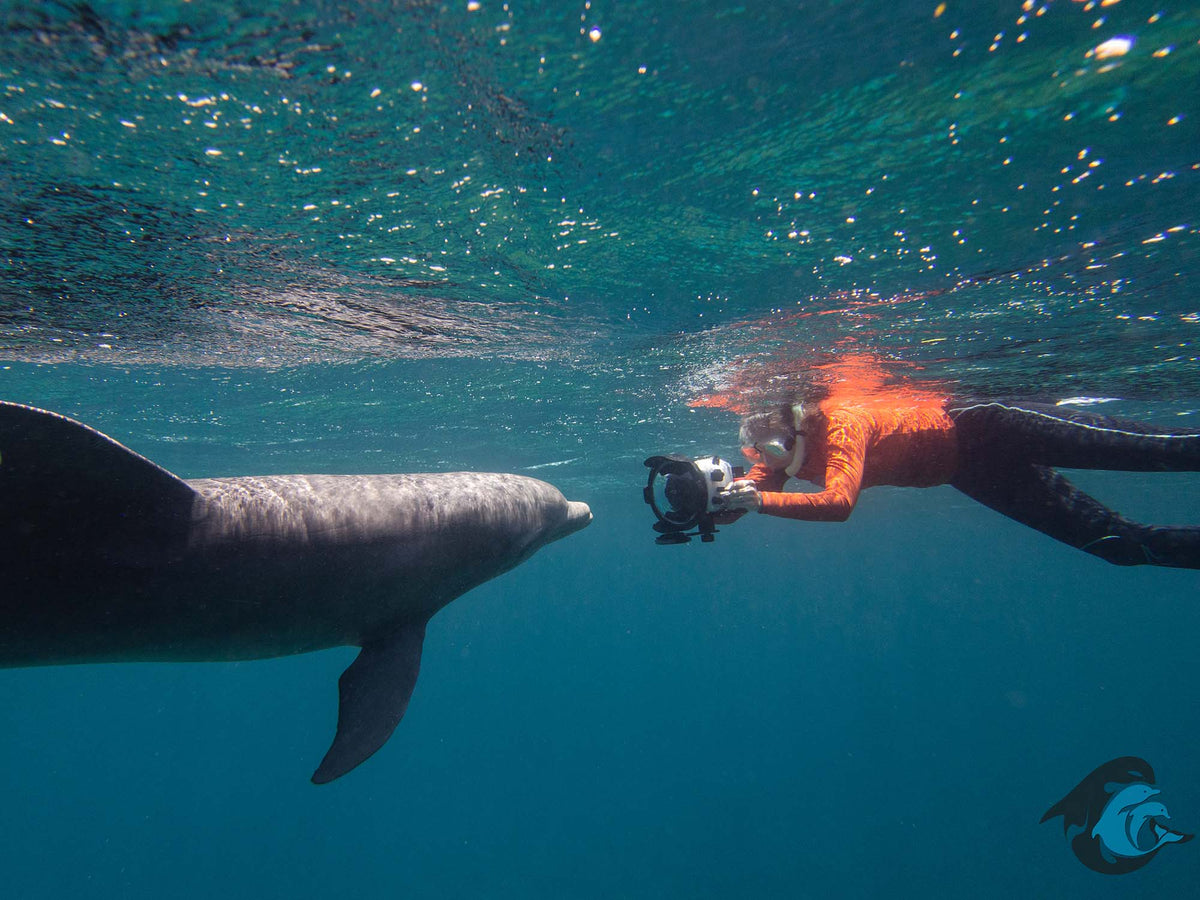
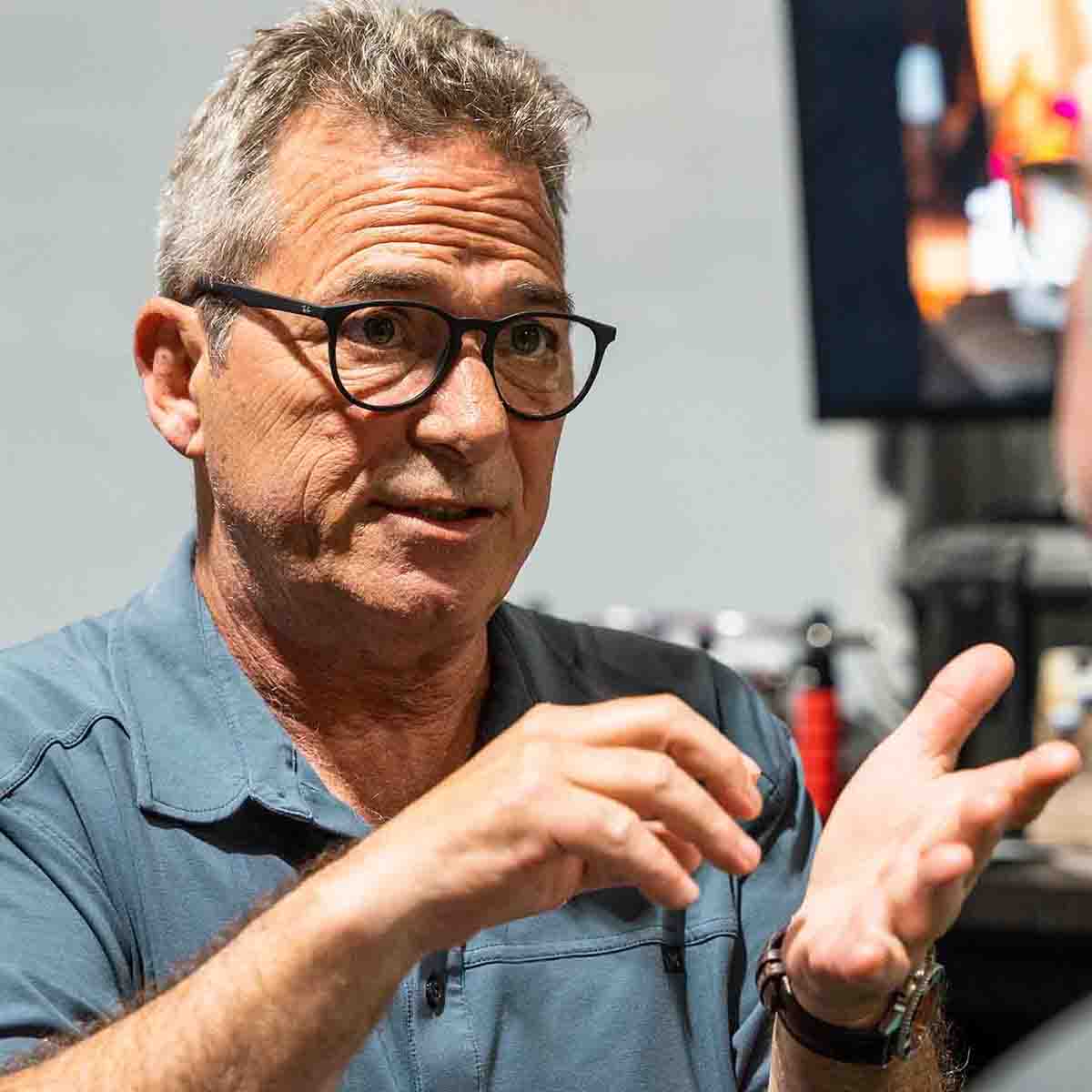
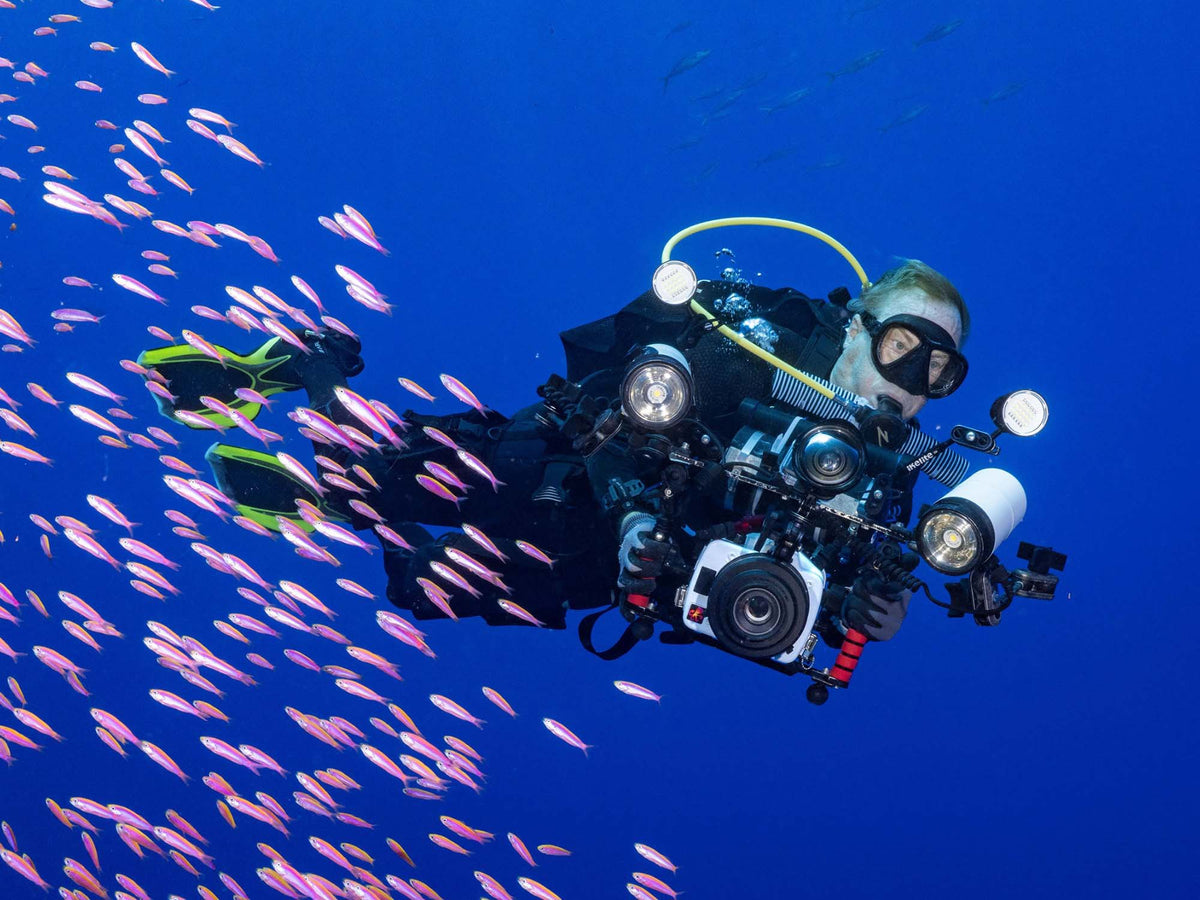
My name is David Fleetham. I'm a professional underwater photographer and an Ikelite ambassador and we're just going to go over what you can look for on a reef and ways to find subjects that you might have otherwise overlooked.
Cleaning Stations
To begin with we're going to talk about cleaning stations. I have spent entire dives at a single cleaning station where small wrasse come and service fish that take turns having parasites removed from them.
There's not just fish cleaning stations, although a manta is technically a fish, but the manta rays also come into cleaning stations to have parasites picked off them. So, if we're in a location where there are manta rays, that's often what we will look for - a place where the mantas just continually circle around a rock. And it's not just wrasse at that point, there’s butterflyfish and other species of wrasse because the mantas have larger parasites on them.
In Bali, there's a spot where mola molas come up from the depths and also hit the reef in order to get cleaned. It's not wrasse in this case, they get bannerfish and even large angelfish. Those mola molas are hundreds and hundreds of pounds, it is the largest bony fish in the world.

The largest bony fish in the world, the mola mola, being cleaned by bannerfish. © David Fleetham
The other cleaning station that I frequent is one that you find sea turtles. Sea turtles often spend a lot of time in open ocean where they will accumulate a growth on their shells. When they finally get into the reef, they will come and have butterflyfish and several types of surgeonfish come and clean the algae off their shells. They'll just either hover in mid-water or even just lay on the reef and let those fish go not only all over their shells, but their necks, everywhere. They get cleaned, which is a great shot.

Turtle surrounded by a team of surgeonfish cleaners. © David Fleetham
Antler Coral
The next place I look as I'm cruising over the reef is for antler coral, which is a big stand of hard coral. I'll search in that antler coral because it's like a little living community inside there.
There's crabs that protect the antler coral and they're often at least in a pair, if not more of them, one larger than the other, which is the female. The female often, at least every month in a cycle, will have eggs in its abdomen, bright orange eggs. That's the first thing I look for. They're called guard crabs because anything that comes and threatens the colony or the coral the guard crab will come and nip on them and get rid of them. If a crown-of-thorns starfish comes over onto the coral, it has long tentacles with suction cups on the end that it moves around with and relentlessly those guard crabs will just come up and continually pinch that and the crown-of-thorns starfish will finally go, “okay, that's enough” and move on to an easier meal.

The trick to shooting guard crabs (and other antler coral inhabitants) is pulling your strobes in close to the barrel of your lens. © David Fleetham
Along with the crabs, there's several species of shrimp that live inside these antler coral and they're in there for protection. All sorts of different species of fish can be found in those too. Here in Yap, I found a yellow spotted scorpionfish, a little guy, that’s a species I'd never found before and turns out that's their home.
All of those subjects are really tough to shoot because the antler coral is so convoluted that if you have your strobes out to the side firing trying to shoot something that's down inside, all of the rest of the coral will block that light from getting there. To remedy this you have to take your strobes and move them over almost right beside your lens that's looking down inside so that you're firing the light down into your subject. It's a tricky shot but a rewarding one if you get it.
Feather Stars
The next thing that I look for on the reef is a crinoid, or feather star, which are often up and out on a reef, often in a current, and they have these really intricate arms that look like feathers, hence the name feather star.
They house lobsters, a type of squat lobster, there are shrimp that live inside their arms, there's even a fish called a clingfish that swims around inside that arm area. At the very base of that crinoid they have arms that hold on to the reef and if you get down low and look inside there's usually squat lobsters around that bottom area that can feed on the bottom underneath those crinoids. So that's another one that I'll investigate and sometimes I won't find anything and I'll just move on to the next one and investigate that one.

Check out the base of feather stars, you're likely to find shrimp (pictured here), squat lobsters, and clingfish. © David Fleetham
Sea Urchins
Sea urchins are also homes and hiding places for all sorts of creatures. There are shrimp that look like the spines of the urchin themselves and camouflage in there. There's crabs that live actually inside the top of the sea urchin so I'll always go over and have a look and see what what I can find there.

A well-camouflaged shrimp hiding among a sea urchin. © David Fleetham
Hunting Parties
As I move about the reef I'll watch for movement, things that are are going on. There's often hunting parties out moving around on the reef and they seem to be centered mostly around moray eels. So if during the day you see a moray eel out swimming around, follow him. Often moray eels will be followed by jacks, by trumpetfish, by goatfish, and they hunt cooperatively.
Even octopus and goatfish hunt cooperatively. The idea, I think, is that the octopus will go in and attempt to find a crab, a shrimp, or a fish that it can nab for a meal and if that prey attempts to get away from the octopus and shoot out from under its hiding place then the goatfish is right there and will nab it. They work as a team with one getting a meal on one occasion and another getting a meal on another occasion.
It's worth following those around on the reef and and checking out those hunting parties and really look for anything moving.

Moray eels seem to be the epicenter of a lot of hunting parties. If you're looking to photograph these unique interactions, keep your eyes close on active moray eels. © Logan Wood
Movement on the Reef
If you're swimming along and you think, oh I think I saw something move, there are so many things that are decorated with sponges and algae, just go investigate those.
There's all sorts of different species of crabs that actually plant sponges and even coral polyps on their self to imitate the reef and be able to move around undetected as a crab.
So any movement you see definitely go and explore what that is. It might just be the current or the surge moving something and it's really just algae or coral, but I'll always look for that movement on the on the reef.

Some crabs will go so far as planting coral polyps on their bodies to enhance their camouflage. © David Fleetham
Whip and Wire Corals
The next thing I look for is whip coral or wire coral, which is just a long single strand of coral that grows from the bottom, or often off other coral walls, and they'll reach out into the current and on those you find shrimp and gobies that use that as camouflage.
The gobies, if you watch for a while, will dart away from the wire coral and grab a little piece of plankton and then immediately move back because that's their safe harbor, that's where where they are like less likely to be spotted as prey.
Then there's different species of shrimp and even crabs that live on the whip and wire coral and they often blend in so it takes a good eye. I'll sometimes just take a finger and go on the opposite side of the coral, without touching it, because when you approach it the goby will often just move to the other side of the coral and then you'll see that there is actually something there.

Whip and wire coral make for really pleasing images as they're often isolated from the background which helps to make your subject pop. © David Fleetham
Tunicates & Sponges
Tunicates are small individual animals that are on the reef, they sort of almost look like a light bulb. There's many things that live on, around, and even inside those those tunicates.
There's little copepods and amphipods inside and often there's gobies in some species of tunicates, it's a favorite place and they'll they'll rest there with the eggs and stay with them while they develop and before they hatch.
Sponges are another thing that I'll investigate. Often the surface of sponges are very convoluted. The outside is very wavy with cracks and crevices and all sorts of little hairy squat lobsters in some of them and other shrimp and starfish that live in those crevices use it for protection. Even big barrel sponges will have fish down inside them sometimes lionfish like to hang out in there. So look for sponges and investigate those.

Otherworldly-looking and home to amphipods and gobies, don't miss a chance to examine tunicates and sponges for photography subjects. © David Fleetham
Sand Mounds and Rubble Areas
One section of the reef that often people just pass over is where there's big sand or rubble areas, and those can be filled with life. It takes a a keen eye looking quite a ways in advance of you because most things in the sand hide and so if you get anywhere near them they'll pull down and disappear.
There are gobies that live with shrimp and the shrimp are practically blind and so those shrimp build a burrow or a hole in the sand where the goby lives and the two of them work cooperatively together. The goby is the seeing-eye fish for the shrimp and so he'll sit outside that hole and so you have to look way down because if you approach too quickly the goby will get the shrimp's attention and both of them will disappear into that hole. The way it does it is the shrimp always has one of its really long antenna constantly touching the goby and they communicate through that antenna and if the goby thinks that there's danger nearby they'll both just disappear.

Seeing-eye goby? These shrimp and goby have a mutualistic symbiotic relationship that can make for some really interesting behavior shots. © David Fleetham
There's all sorts of eels that live in and underneath the sand and again you have to look way in the distance. Garden eels will come up out of the sand especially when there's a current going and they just feed on passing morsels that the current brings by and as you approach them they will just disappear down. They're really tough to get a photo of.
The other thing to look for in the sand as you look out is just a mound and sometimes that mound will have a pair of eyeballs on it. There are flounders and stingrays that settle on and disrupt the sand so that they'll send up a little cloud that then comes back down and covers them, so look in advance for little mounds. When you get near them often they'll just lift up and take off. Sometimes they will feel as though they've done a great job of camouflage and they'll let you get very close because in their fish mind they're like, "Nah, he doesn't see me" and you can get some great eyeball shots or get shots of them lifting up and swimming away.

Blink and you'll miss it. There are tons of sand-dwelling animals, like this peacock flounder hiding in the sand. © David Fleetham
There's also areas that are broken dead coral that we refer to as rubble areas and those too have loads of creatures living in them. More often that's where you'll find nudibranchs and some other shells like cowries and snails that will be moving around in there, most of the time are colored so that they match what's in there. Those colors sometimes are bright red and bright orange, but because the sun is filtered you don't see those with the naked eye and that's another reason to carry that light and to illuminate and see, "Oh there's something red I'm going to go check that out and see what that is."
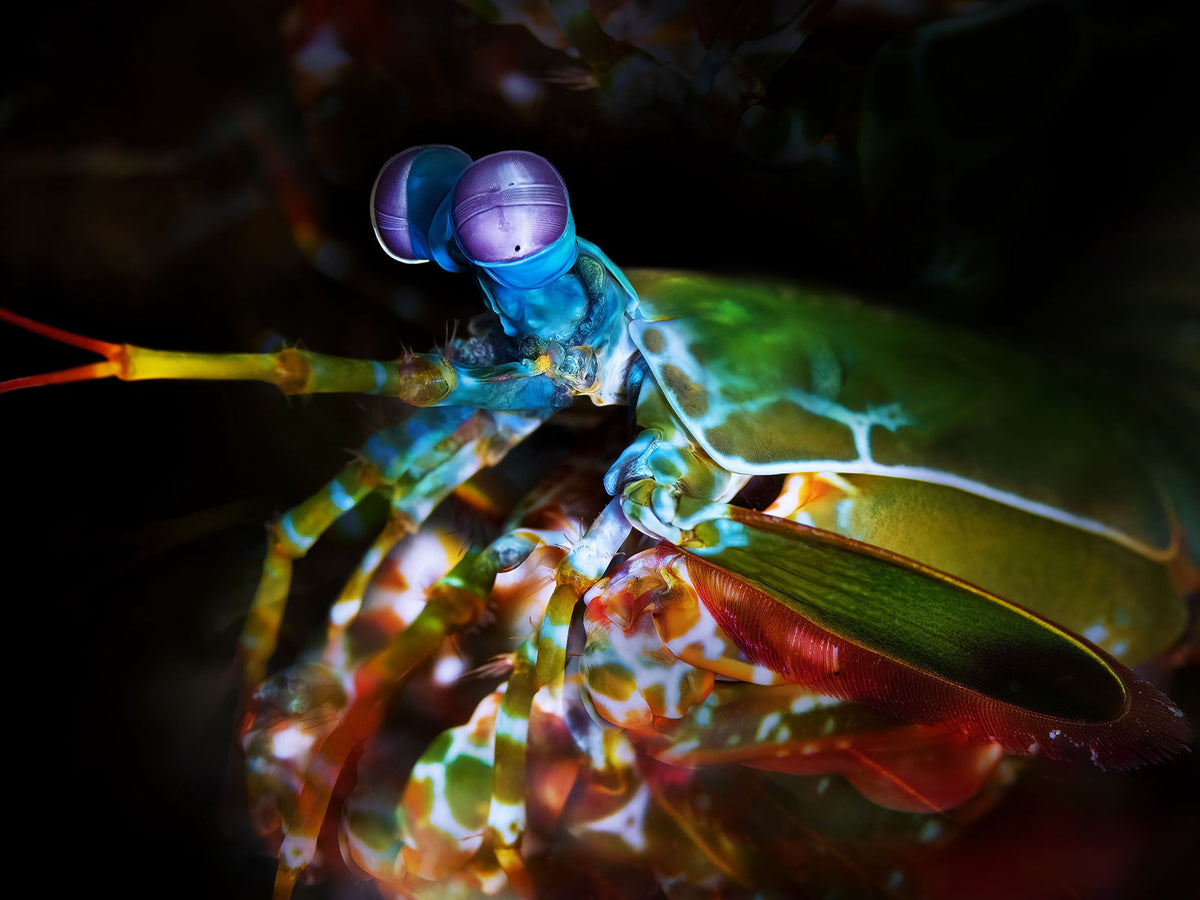
Both areas also will have small holes that the goby and the shrimp are in. But there are even larger ones and mantis shrimp make these holes their homes and they'll just come up to the top of the hole with these amazing eyes. Those are another great subject, just approach them slowly. If you approach them too fast or light them too much they'll just disappear in that hole and and be gone. So approach cautiously and take your time.

One of the most iconic macro subjects, mantis shrimp, require a cautious and mindful approach but they're worth the wait. © David Fleetham
Gorgonian Coral
On the reef, and especially on wall dives, you'll often find enormous fans of gorgonian coral that grow out into the current and filter feed by those passing plankton waters. On the gorgonian fan there's often a family of creatures living on those. There's shrimp, there's hawkfish, there are pygmy seahorses, and often really tiny critters and some that blend right in.
The shrimp and the pygmy seahorses are often colored just like the coral polyps and some of those shrimp are elongated that resemble the long branches of the coral itself. So you really have to look hard, it sometimes helps if you're shooting that with a buddy in that one can look at one side of the coral while the other one looks at the other side because those subjects when you start shining a light will often move to the other side of the coral. So if there's somebody on the other side doing the same thing one of you will be able to get an image that way.

Another really well camouflaged animal, the pygmy seahorse, will blend in with their gorgonian surroundings. This is a great subject to approach as a team with your dive buddy. © David Fleetham
Anemones
Lastly, anemones are the other thing that I never pass up and not just because there's really cool clownfish that live on them, but there's a whole family that is associated with that anemone.
There's many different kinds of shrimp that get protection in there. There's often damselfish that will also use the stinging tentacles of the anemone for protection, it's not just the anemonefish (clownfish) that are protected against the stinging.
I'll look around and I'll watch the anemonefish and watch what they're doing and if they go to a certain place on the anemone fairly regularly and even go underneath the anemone then I'll look for eggs. Every month it seems that the anemonefish lay their eggs either beside the anemone or even virtually underneath the flap of the anemone. Those eggs are bright orange when they first lay them and then as they develop they get darker and darker and finally almost black and inside you'll see eyeballs inside the eggs and right before they hatch you can even see the larval fish moving around inside those eggs. So anemones, check around them - there's crabs, there's shrimp, all sorts of things that live around those anemones.

The anemone fish (or clownfish) is literally named after it's habitat. If you've got good timing you'll likely be able to use a macro lens to shoot some of their eggs too. © Logan Wood
Take the Time to Look and You'll Find It
Photography is not just going down and shooting what's right in front of you. You need to spend some time down there. I often find that the least area of reef that I cover ends up being my most productive dive. Instead of just drifting past all the life that is there, if you take the time to look you'll find plenty of photography subjects.
Additional Viewing
My Micronesian Ikelite System for Canon R5 // David Fleetham's Underwater Photography Gear [VIDEO]
Yap, Micronesia Underwater Photography
How to Find Something to Photograph Underwater
The One-Lens Underwater Setup? Canon 18-150mm in Yap [VIDEO]
3 Lightroom Edits to Make Macro Subjects POP [VIDEO]
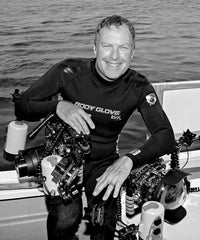 Ambassador David Fleetham left his hometown of Vancouver, Canada, for Maui in 1986 and never looked back. He earned his USCG Captain's license while working in various dive charter businesses, shooting, and submitting his photos to magazines and businesses. One of the most prolific underwater photographers of his time, David now has galleries and agents in over 50 countries that reproduce his images thousands of times each year. Read more...