


By Jeff Milisen
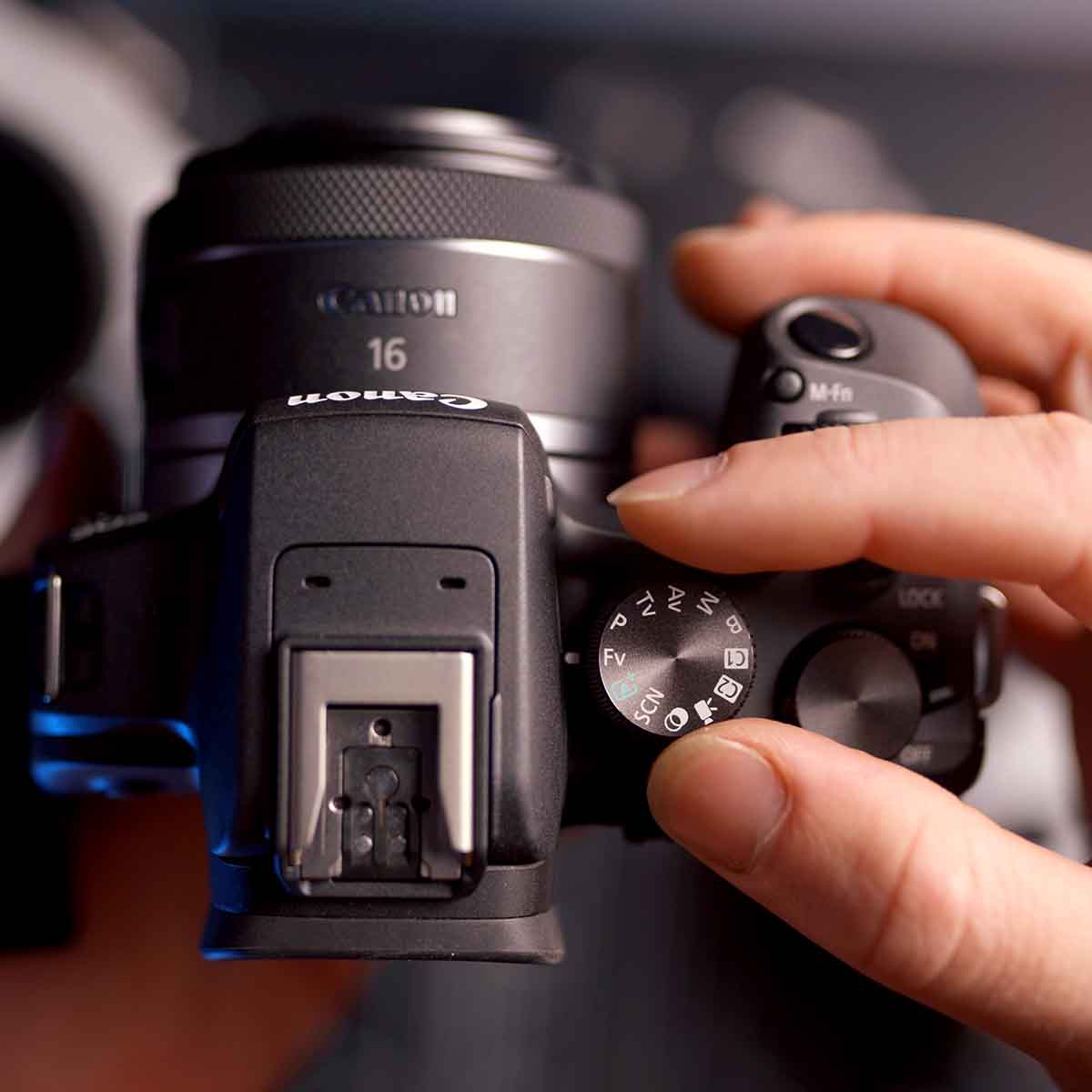
Brown is the color of comfort. Just look at its synonyms: hazelnut, chocolate, sepia, beige, swarthy. Lots of brown things are symbols of coziness, too: dogs, leather couches, my wooden desk, bread, hot cocoa, and the list goes on. The ocean near my home in Kona is no different. I know the animals and corals that live there as well as I know my own family, and many of our fish and most of our corals are various shades of brown. While I advocate frequently for diving my local waters, it is nice to branch out and see something different. I recently traveled to Fiji, and everywhere I looked were brilliant reds, hazard-oranges, and dazzling yellows. Neon soft coral heads exploded with hundreds or thousands of colorful specs of fish. Even the sharks were more of an imposing slate gray. If there is a Fijian word for brown, they don’t use it very much. Fiji wasn’t just a change in color palettes for me-it was a proving ground for Canon’s new full-frame body: the Canon R5 II.

Canon RF 14-35mm at 14mm • 1/200 • f/16 • ISO 250 © Jeff Milisen
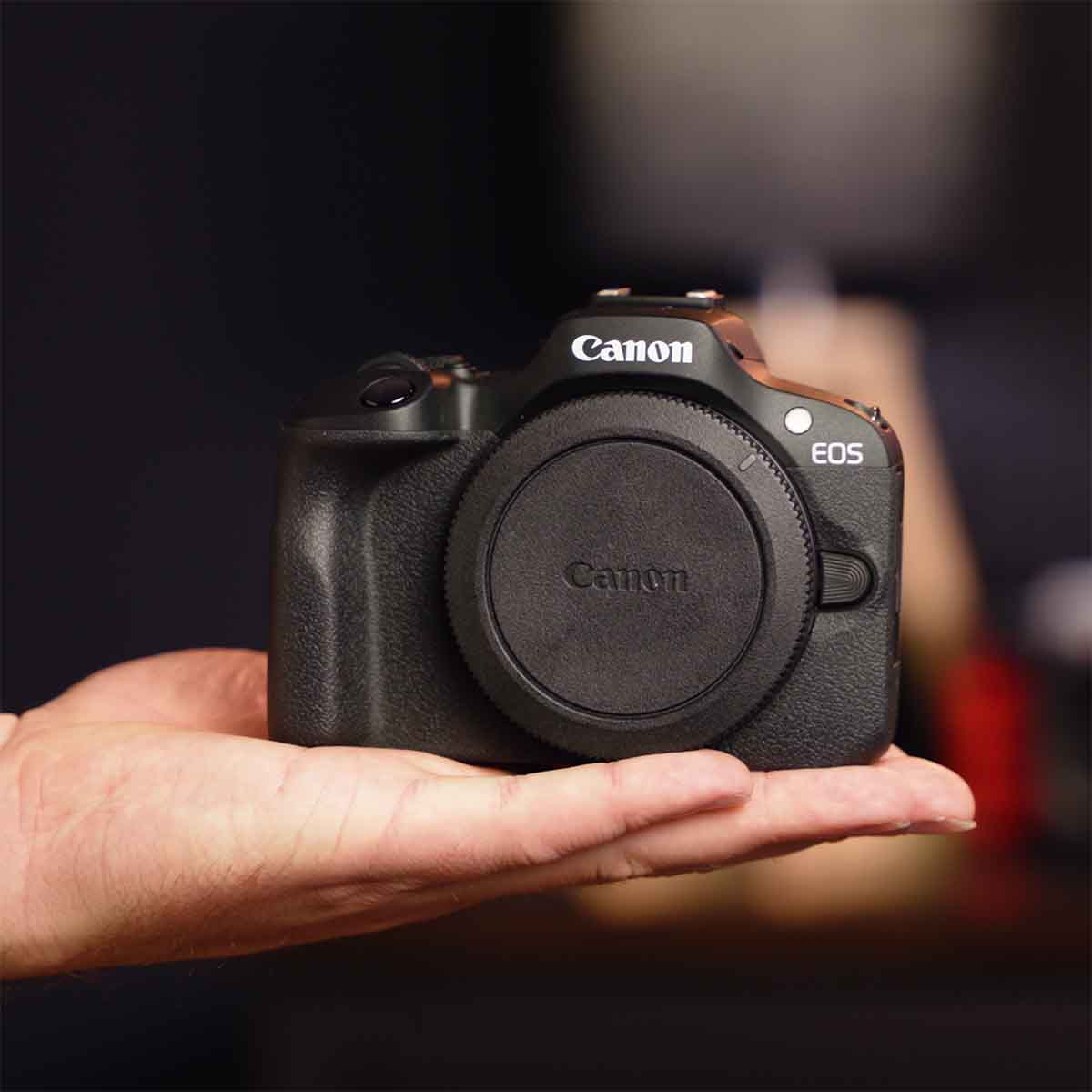
Unlike Fijian reefs, the camera is textured in cold, no-nonsense black. Behind the matte finish is a powerhouse of specs. The base for this image-making machine is a 45MP full-frame sensor, and the processor behind it has made it the most versatile camera in Canon’s lineup. Flawless images are a given in today’s camera-scape; modern cameras also have to produce video and be hyper-intelligent. Not only was I traveling somewhere new, but I was also learning a new system along the way.
My goal was to test the camera under as many varied conditions as I could find. My trip would start at Volivoli to dive lush reefs between the islands of Viti Levu and Vanua Levu, and then travel south to Beqa Lagoon to capture the fast aggression of bull sharks on the legendary feeding dive.

Canon RF 14-35mm at 21mm • 1/200 • f/11 • ISO 640 © Jeff Milisen
Reefscapes
The Diving: In 1789, Captain William Bligh was overpowered by 18 disloyal crew members and set adrift in the south Pacific, setting the stage for one of ocean exploration’s most famous tales. He then sailed between the islands of Viti Levu and Vanua Levu, but did not stop for fear of cannibals. This passage has become known as “Bligh Waters.” The coral reefs that dot the ocean are home to some of the lushest soft coral in the world.

Canon RF 14-30mm at 14mm • 1/200 • f/16 • ISO 250 © Jeff Milisen
The reefs offshore from Volivoli were stunning. Walls were draped in brilliant pink soft corals and adorned with tens of thousands of anthias and damsels. It was bewildering. Depicting a reef scene this dynamic-and having the photo come out the way you remember it-means mastering the art of close-focus-wide-angle (CFWA). A successful CFWA image has 3 distinct elements: a foreground, midwater, and background. Finding a coherent subject among the chaos of a lively reef can be a real challenge. To overcome this, I look for an area away from divers that has a lot of active fish. I then zero in on the prettiest coral head, get close, and start shooting upwards. With the coral as the foreground subject, the fish in midwater, and the water’s surface and sun ball as the back, this is textbook CFWA!

Canon RF 14-35mm at 14mm • 1/200 • f/16 • ISO 500 © Jeff Milisen
Performance: As the name suggests, successful CFWA requires wide-angle gear. With the aforementioned R5 II, I used the Canon 14-35mm lens behind an 8” dome. Twin Ikelite DS230s provided the fill lighting and gave the coral its color. The results speak for themselves.
Canon’s color rendering is what drew me to the brand a long time ago and continues to be one of its strong points. The Canon color system errs on the side of warm tones which highlights fiery Fijian reefscapes. When shallow and shooting up, the low iso made full use of the 25 bits of color depth making for super smooth color gradients even in the high-contrast and wildly dynamic scenes.

Canon RF 14-35mm at 14mm • 1/200 •f/14 • ISO 160 © Jeff Milisen
Macro
The Diving: Fiji isn’t touted as macro-centric. With so much motion happening all around, it feels like a crime to focus in on just one part of it. Even in the face of megafauna, a macro setup will often change my perspective on scene composition by forcing me to focus on creating portraits, or as my wife calls them, “boring fish pics.” It forces me to focus on the parts of the wide-angle scene before trying to put them together. This is especially effective when I am struggling to find my photographic stride. You can nearly always find something to shoot on macro. The R5 II rewards that shift in mindset by making precision feel effortless rather than fussy. When I switch back to wide, I shoot more confidently with a couple of shots in my back pocket, and I see the scene as parts of a whole.

Canon RF 100mm • 1/200 • f/16 • ISO 2000 © Jeff Milisen
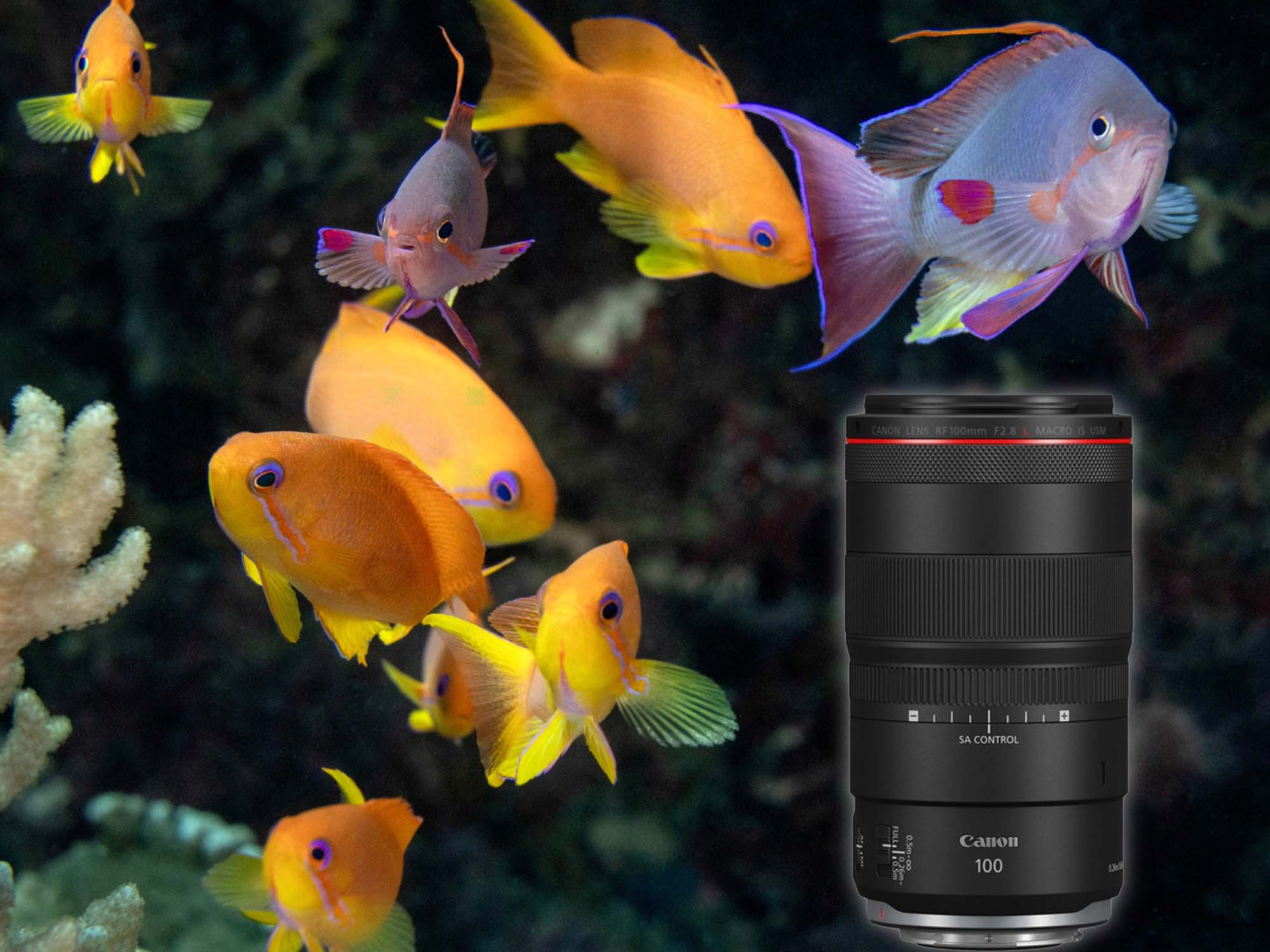
Performance: With bags full of dome ports and dive gear, I didn’t have space to include a snoot or dedicated macro strobe, so most of the setup was similar. The only macro extras I included were a Canon RF 100mm lens and flat port. The RF version is mostly similar to the older EF 100mm L. They kept the sharpness and lightning-quick focusing speed, but instead of magnifying to only 1:1 as in the EF version, the RF version will focus to 1.4x! The extra magnification is a huge advantage over other macro lenses.

Canon RF 100mm • 1/200 • f/14 • ISO 2500 © Jeff Milisen
There are two areas where the R5 II has a huge advantage over its predecessors when it comes to macro: subject recognition and stabilization. The focusing accuracy in dense clouds of fish was incredible. I wasn’t able to follow a single fish with my bare eyes, but the camera found the right eyeball and locked in right away. Stabilization has been a feature that past Canons have struggled with. Their DSLRs, for example, never incorporated in-body stabilization and instead relied on lens stabilizers. This always made for choppy videos. I’m thrilled to report that the 5-axis stabilization in the R5 II is up to snuff with the rest of the class to produce rock-solid videos.

Canon RF 100mm • 1/200 • f/16 • ISO 2500 © Jeff Milisen
Fast Action
The Diving: Beqa is widely considered to be one of the world’s best shark dives. The resident bull sharks reach gargantuan proportions and swarm in the dozens. The head of each large shark is so wide that they look like tadpoles when viewed from above. The dives are surprisingly well orchestrated. They start the dive by dropping a garbage bin full of fish heads to the bottom. Divers then splash and assemble behind a limestone wall. Behind the divers are dive guides, each carrying a big aluminum pole that they use to prod curious sharks away. We left the scene with the garbage bin still shut. By the time dive 2 happens, swarms of sharks have gathered and circle the garbage bin. We all know what is about to happen. The tension in the water is tangible.

Canon RF 14-35mm at 21mm • 1/200 • f/11 • ISO 800 © Jeff Milisen
My intention was to film the opening of the garbage bin with a GoPro while taking stills of the action with the R5 II. What actually happened on the first dive is I started the GoPro and then stared slack-jawed while a maelstrom of sharks leaped into action, twisting their bodies in insane displays of power, each jostling for their own piece of the bait. Fortunately, by day 2 I knew what to expect and managed to keep my wits about me for the action shots.

Canon RF 14-35mm at 14mm • 1/200 • f/11 • ISO 640 © Jeff Milisen
Performance: I was back to shooting wide angle for these dives. The large camera system with outstretched strobe arms was ideal not just for shooting large subjects, but also for fending off toothy creatures that got too interested in me.
My first thought on the equipment performance goes to the DS230 strobes. They were great for the reefs at Volivoli, but that was a relatively tame environment that failed to really put these lights through their paces. The fast action of the bull shark dive meant that I needed strobes that would fire, recycle, and fire again less than a second later. The DS230s kept up and didn’t complain once.

Canon RF 14-35mm at 14mm • 1/200 • f/11 • ISO 500 © Jeff Milisen
This environment also challenged the camera’s sensor. The dives were deeper, the action was fast, and to achieve decent depth of field on a full frame sensor requires the aperture to be stopped way down. In situations this fast, I stop shooting just long enough to dial the exposure to an acceptable level and then resume. I was shooting at ISOs far above what I would normally consider, the R5 II handled it and continued producing staggering shots with minimal noise.

Canon RF 14-35mm at 17mm • 1/200 • f/16 • ISO 2000 © Jeff Milisen
In Conclusion
We got back from this tropical paradise in August and I’ve been ducking Ikelite’s calls to return the camera ever since. Outwardly, I blame the kava, but the truth is simpler: this is a seriously capable camera that checks all of the boxes.
Underwater travel photography has a way of exposing the cracks in both skill and equipment. Fiji was unfamiliar in every sense: brighter, busier, faster, and less forgiving than the brown comfort of my home reefs. Whether I was trying to tame the chaos of a soft coral reef, isolate a subject among a cloud of conspecifics, or react to the explosive violence of feeding bull sharks, the camera stayed responsive, predictable, and out of its own way. More than that, the R5 II felt like a camera designed for photographers who don’t always know what the next dive will bring. It doesn’t demand perfection-it rewards trying new things. This trip reminded me that while comfort has its place, growth lives somewhere else entirely. Sometimes, all it takes is unfamiliar water and a camera ready to meet it.

Canon RF 14-35mm at 19mm • 1/200 • f/16 • ISO 2500 © Jeff Milisen
Equipment Used
- 200DL Underwater Housing for Canon EOS R5 II # 71765
- Canon RF 14-35mm F/4 L IS USM Lens
- Canon RF 100mm F/2.8 L Macro IS USM Lens
Additional Viewing
Canon R5 II Initial Impressions for Underwater Photographers [VIDEO]
Canon R5 II Setting It Up // 200DL Ikelite Underwater Housing Assembly [VIDEO]
Best Macro Lens for Canon Mirrorless Shooters: RF 100mm F2.8 L Macro IS USM
An Insider's Guide to Blackwater Photography
Bringing Out the Colors of Fiji: "Soft Coral Capital of the World"
Diving Fiji by Liveaboard | Brilliant Bligh Water
 Ambassador Jeff Milisen is an internationally acclaimed underwater photographer who has specialized in blackwater photography since 2009. He is a recent addition to the Ikelite ambassador team. His upcoming book, a Field Guide to Blackwater Diving in Hawaii, will help both newbies and seasoned blackwater veterans identify the strange animals they encounter. He currently shoots with a Canon EOS 7D Mark II and dual Ikelite strobes. Read more...