



By Josh Blank
There's always a little bit of hesitation when changing any equipment on your underwater system, particularly when it comes to strobes and lighting in general. The fact is, adding external lighting to your rig introduces a number of considerations and variables underwater, and it's important to pay attention to not only the key specs of your strobes, such as power output, recycle time, and colour temperature, but also the way in which they are triggered.

Nikon Z8 with the NIKKOR 8-15mm f/3.5-4.5E at 15mm • 1/200 • f/8 • ISO 320 © Josh Blank
Since I first started underwater photography back in 2016, I have been a strong advocate for Ikelite strobes, relying upon a direct connection via electronic sync cords. At the time, this method was known to result in faster recycle times and improved overall reliability; however, this came at a cost—once connected to your housing, they are easiest left in place in wet environments.
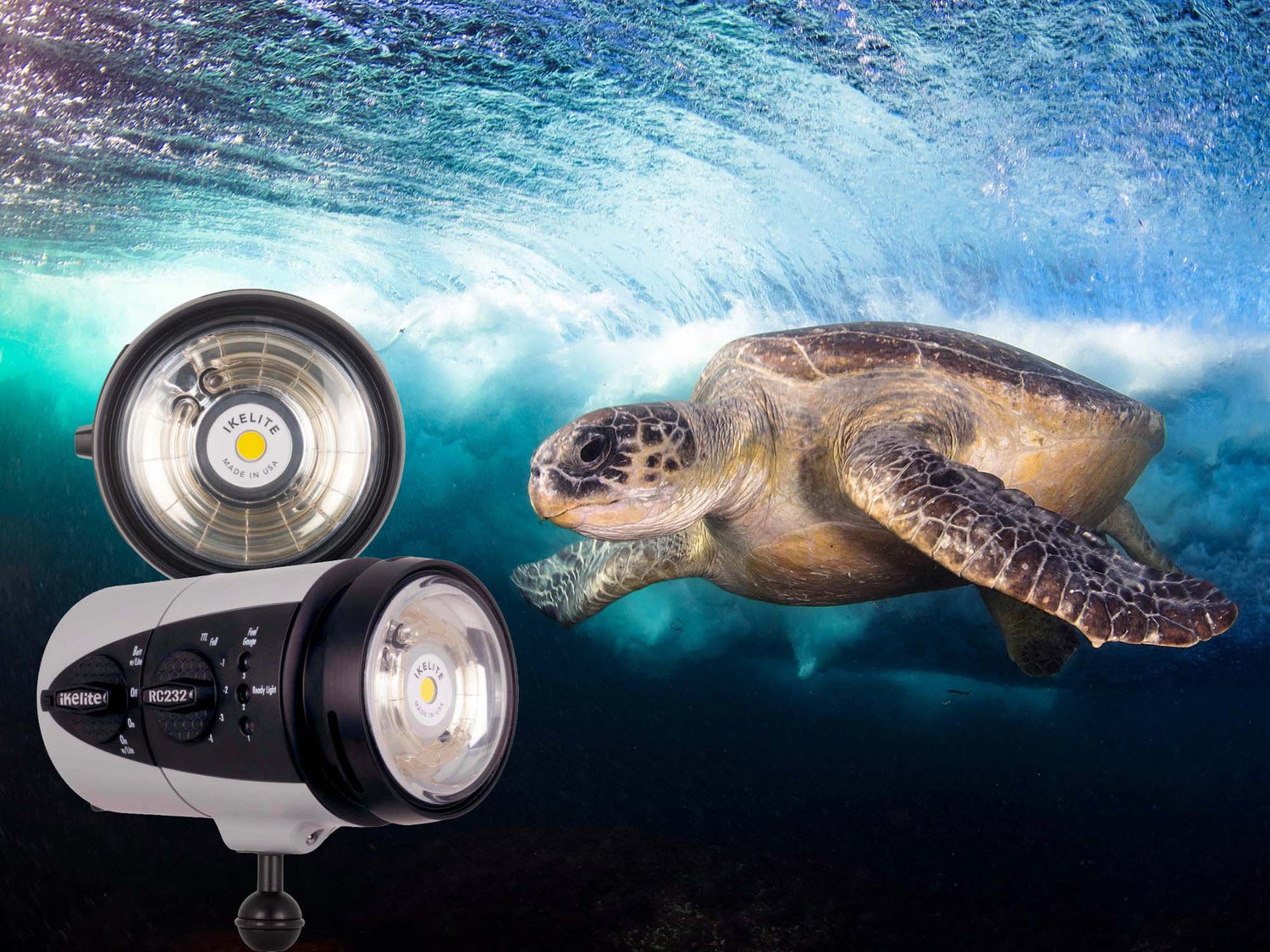
Over the years, I often found myself in situations that would demand flexibility, where one encounter would be ideal for strobes and moments later would require natural light only. Then the Ikelite fiber optic converters were released, offering the perfect solution for DS series strobe shooters like me. Finally, I was able to venture offshore or to various dive sites with complete flexibility, being able to simply detach and reattach my strobes in the field without any concern of damage to my equipment. The converters served me well for a number of years, until earlier this year when Ikelite released a professional-grade strobe (plus video light) with a native fiber optic connection, the RC232.
Whether you're currently in the market for a new set of strobes, or thinking of switching from an electronic connection to fiber optic, keep reading for the five main reasons I personally made the switch!

Nikon Z8 with the NIKKOR 8-15mm f/3.5-4.5E at 15mm • 1/200 • f/8 • ISO 250 © Josh Blank
REASON 1 | Simpler is Better
The main reason I was excited to switch to the RC232 strobes was the built-in fibre optic connection. While the adapters were a huge cost savings over all the years I was shooting with the DS series strobes, they did add extra elements to my rig.
Underwater camera systems are also already complicated enough with so many parts to check and maintain. As a general rule, I like to keep my rig as simple as possible, and with the least number of O-rings and connecting parts as I can. The RC232 strobes accomplish this perfectly, resulting in less bulk, less chance of potential damage, and overall less to think about when it comes to setting up, diving, and packing down later.

Nikon Z8 with the NIKKOR 8-15mm f/3.5-4.5E at 15mm • 1/200 • f/8 • ISO 320 © Josh Blank
"I like to keep my rig as simple as possible... the RC232 strobes accomplish this perfectly."
REASON 2 | Peak Performance
Having shot with dual DS230 strobes for so many years, I must admit I was initially a little concerned about a potential trade-off in terms of performance, but this certainly has not been the case.
With regard to recycle rate, the RC232s easily keep pace with high-speed continuous frame shooting up to 10 frames per second, with no power fall-off throughout the sequence.
Maximum power output is no different, capable of producing the same 213Ws of flash for those extra-large scenes such as schooling fish or coral reef walls. The high power also comes in handy when working to achieve more creative techniques like motion blur images.
Lastly (and most importantly in my opinion), the RC232s produce the same perfect colour temperature of 4800K. The result of this is warm, accurate colours of marine life while maximising deep blues in the ocean background. So ultimately, the same high-end performance in a smaller, easier-to-manage package.

Nikon Z8 with the NIKKOR 8-15mm f/3.5-4.5E at 15mm • 1/200 • f/8 • ISO 250 © Josh Blank
"Ultimately, the same high-end performance in a smaller, easier-to-manage package."
REASON 3 | Easy Maintenance
I love just about everything about being an underwater photographer… If there is just one thing I absolutely do not enjoy, it's having to put together and pack down my rig before and after a dive!
It might not sound like a big deal, but I have absolutely enjoyed not worrying about setting up, cleaning, and maintaining my fibre optic converters or sync cords. The entire setup with the RC232 is simply quicker and easier, which is always a big plus, particularly if diving regularly.

Nikon Z8 with the NIKKOR 8-15mm f/3.5-4.5E at 15mm • 1/200 • f/11 • ISO 125 © Josh Blank
"The entire setup with the RC232 is simply quicker and easier, which is always a big plus, particularly if diving regularly."
REASON 4 | More Travel-Friendly System
Reducing rig size and clutter is always a positive for underwater photographers, especially when traveling. All too often I’ve found myself being held up at airline check-in counters, being asked to downsize because I am only a couple of kilograms overweight.
The native fibre optic system of the RC232s means a smaller, lighter system all around, with only very thin, lightweight fibre optic cables required in addition to the strobes themselves. Making the switch now means fewer accessories to carry and less gear to organise once arrived at the destination.

Nikon Z8 with the NIKKOR 8-15mm f/3.5-4.5E at 15mm • 1/200 • f/8 • ISO 250 © Josh Blank
"The native fibre optic system of the RC232s means a smaller, lighter system all around."
REASON 5 | Versatility & Reliability
At the end of the day, reliability and adaptability are everything. Making the switch to the RC232s means that I am always well prepared to best capture every single underwater encounter that presents itself on any given day. I know I can easily disconnect and reconnect as required, on the boat with wet hands or even in the middle of a dive if I need to.
While I'm primarily a stills photographer, it is incredibly helpful to have the built-in 2500 lumens video light at my fingertips when I switch over to video recording.
And now I'm left with only the simple battery seal to maintain, which is perhaps the easiest one in existence. With fewer concerns about potential damages or accidents, I can focus more on timing, composition, animal behaviour, and the experience itself!

Nikon Z8 with the NIKKOR 8-15mm f/3.5-4.5E at 15mm • 1/200 • f/8 • ISO 200 © Josh Blank
"Making the switch to the RC232s means that I am always well prepared to best capture every single underwater encounter that presents itself on any given day."
Final Thoughts
The change to the RC232 strobes hasn’t been significant in terms of what I can or cannot do with strobe lighting. However, it has resulted in a number of small changes that have drastically enhanced my overall workflow and flexibility when diving or exploring offshore.
No longer am I concerned about potentially damaging adapters, having to pack additional accessories, or missing an amazing scene best captured with strobes all because I chose to leave them behind that particular day.

Nikon Z8 with the NIKKOR 8-15mm f/3.5-4.5E at 15mm • 1/200 • f/20 • ISO 1000 © Josh Blank
"For underwater photographers looking to enhance flexibility in the field or simplify their rig without compromising performance, the RC232 is a great option!"
Get the Gear
Additional Viewing
Faster, Brighter, Fiber Optic // Introducing RC232 Strobe + Video Light Hybrid [VIDEO]
How to Pack a Carry-On Bag for Underwater Photographer: Pro Tips from Ken Kiefer [VIDEO]
Why You Need Strobes Underwater
An Insider's Guide to Diving the Great Barrier Reef, Australia
Up Close and Personal: A Guide to Underwater Animal Portraits

Josh Blank is a diver and underwater photographer based out of the Gold Coast of Australia. Through a combination of scuba diving and freediving, Josh is passionate about exploring the open ocean and photographing the larger marine species that inhabit the deep blue. With his photography he hopes to inspire, inform, and instill an interest in the underwater world. Josh is the author of two e-Books, Big Animal Underwater Photography and Advanced Techniques for the Big Animal Underwater Photographer as well as the author of the hit eMagazine Wild Narrative. Read more...
![Sony a7 V Underwater in Dominican Republic 4K [VIDEO]](http://www.ikelite.com/cdn/shop/articles/sony-a7-v-dominican-republic-blog-cover_132ab1aa-d6e6-465d-a8ad-a8a8ae6e2869.jpg?v=1781537504&width=2000)
![Canon RF 7-14mm Fisheye FIRST RESULTS Underwater Photos & 4K Video // 200DL Underwater Housing [VIDEO]](http://www.ikelite.com/cdn/shop/articles/Results_Canon_RF_7-14mm_Blog_Cover_6a14b007-259b-4121-a89e-67a29f6fb356.jpg?v=1781739465&width=1280)
