


![Documenting the Remains of Captain Kidd's Final Voyage [VIDEO]](http://www.ikelite.com/cdn/shop/articles/charles-beeker-underwater-archeaology-video-cover-2.jpg?v=1781880030&width=1500)
Featuring Charles D. Beeker
In 1699, after years at sea, Captain Kidd's Quedagh Merchant was set aflame and pushed out to drift...
Over 300 years later, Archaeologist Charles Beeker and the Indiana University Center for Underwater Science set out to prove that the remains of this notorious pirate's last ship were buried beneath the turbulent waves at a shallow site in the Dominican Republic.
The Ikelite crew sets out to dive the wreck of the Quedagh Merchant, while Charles explains the importance of documenting, preserving, and protecting the historical records that lie at the ocean bottom in the form of shipwrecks. From photos and video to 3D photogrammetry, underwater archaeologists rely heavily on high quality imaging to carry out their work at these important sites.
If you're more of a reader, scroll down to read the article version of this video.
Proving the Quedagh Merchant Shipwreck of Captain Kidd
Of all the shipwrecks in this country, I'd say one of the most significant would be the 1699 Quedagh Merchant, the shipwreck of Captain Kidd. It was a treasure hunt, $1.2 million, they missed it. We now have it. People talk about pirate ships - we've got the real thing. And the pictures and the videography is how we show that to everyone else.
In 2007, I was asked to look at the site and I don't say I discovered it, but I did prove it. I looked at it and thought, “Boy, this matches up for the records of Captain Kidd.” He describes 20-some cannons in the hold, 14 or 15 anchors. We go out there, we see all these cannons stacked in a cargo hold underneath are anchors protruding out from underneath the cannons. It's exactly what he described in 1701 in his trial. We've got the physical evidence.

Charles Beeker underwater with the Captain Kidd dedication plaque in the Living Museum in the Sea, Dominican Republic.
When people think about shipwrecks it's difficult, as an archaeologist part of our mission is to interpret that to people. So here in the Caribbean, you see piles of cannons, you see corals growing on them and you've got fish going by and that doesn't diminish the value of the shipwreck itself though. It still tells us the story. It's still the treasure that we're looking at of that shipwreck and the history it represents.

Charles Beeker and former IU student and current Ikelite employee Tori Galloway strategize on the boat during surface intervals in the Dominican Republic while doing field research.
Why Photography is Integral to Underwater Archaeology
People can't go to all the sites I've been in. I've been on thousands of sites. They can't go there, but they can go there through the pictures. It's capturing those images that really spurs the imagination of the general public. Really, as an archaeologist that’s concerned with the environment, having documentation is paramount to what we do.
Now, the best cameras you can put into a housing, it's available. In our case, we're diving for work. So these are tools to take underwater. No different than thinking my hammer and chisel are drilling to put a mooring system in. I like to tell students, "If you go there and you just look around and take mental notes without a photograph or without a video, you haven't documented the resource." So it's really important that we are able to do that.
Ikelite has worked with us for many years to enable us to have good quality equipment for visual documentation. But it's even more important to have good housings, good camera systems today because any diver going underwater can really obtain fantastic models of these sites and individual photos and video too. But capturing that for scientific documentation is what we're really about.

Ikelite continues to be a proud supporter of the IU Center for Underwater Science, helping staff and students document their underwater research.
The Importance of Preservation
These shipwrecks are finite. In the 21st century instead, we really teach students that we've got to make parks and reserves, we've got to protect these sites. So that another 50 years from now they'll be here.
People ask, "What's the most interesting, significant site you're working on?" And it's a good question. And I say, "Well, you know, it's really the one I'm still looking for. And I'm still looking and it's out there. And I hope that we find it."

Indiana University's Center for Underwater Science holds an annual Living Museums field school during the month of May. Students can partake in archaeological and biological investigations, site documentation, and more underwater in the Dominican Republic.
Indiana University Center for Underwater Science
The Indiana University Center for Underwater Science is a multidisciplinary research center within IU's School of Public Health focusing on underwater resources both biological and cultural. Visit the IU Center for Underwater Science website to learn more.
Additional Viewing
Sony a7 V Underwater in Dominican Republic 4K [VIDEO]
Diving into Conservation: The Importance of Marine Protected Areas (MPAs)
Diving the Ghost Fleet: Descending into History in Truk Lagoon
From Research to Outreach: Underwater Photography as a Tool for Science
How To Get the Best Shots When Shooting Wrecks

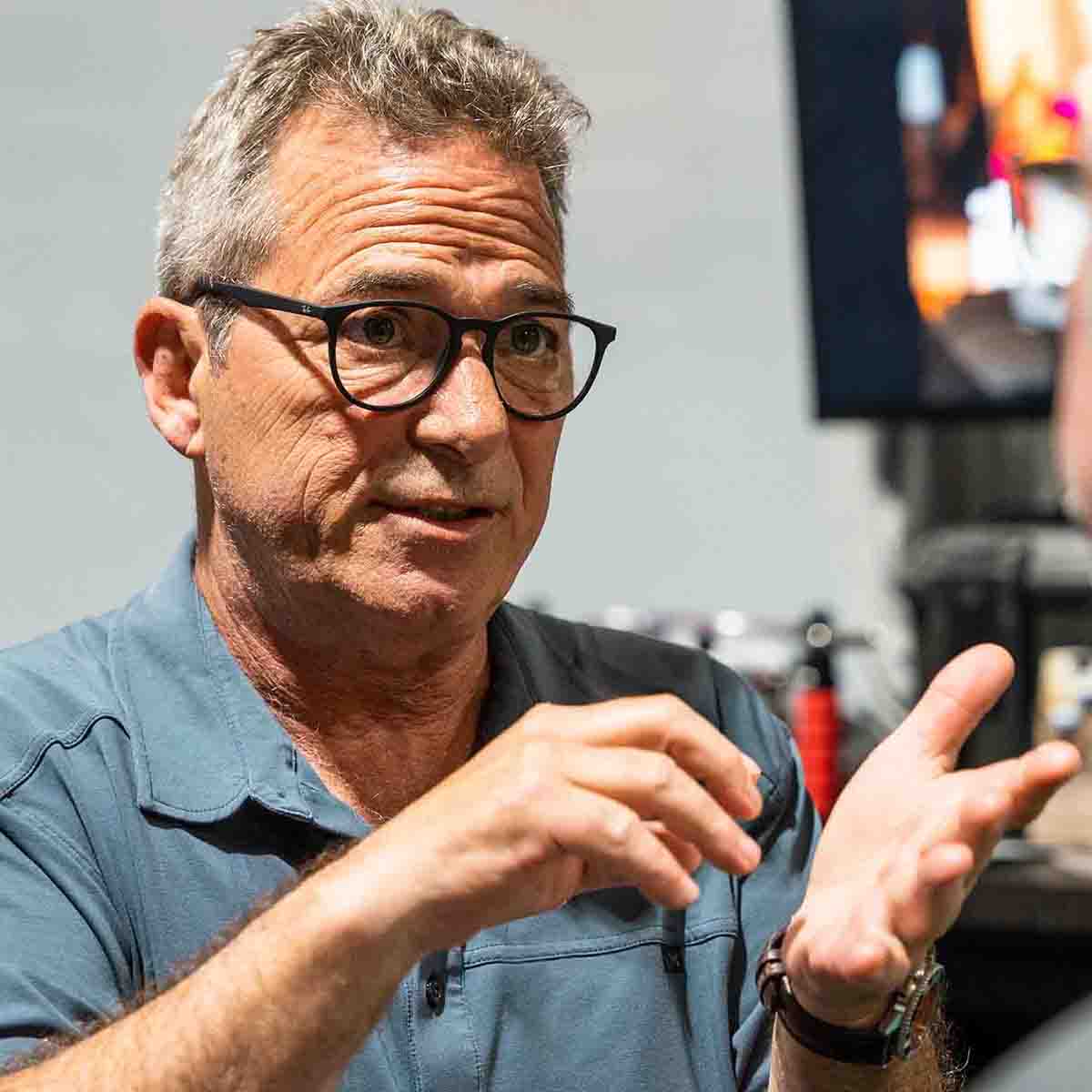
Charles D. Beeker is the director for Indiana University's Center for Underwater Science and Academic Diving Program, a Registered Professional Archaeologist, and scuba instructor whose been teaching for over 40 years. Throughout his career he's worked on committees for the Abandoned Shipwreck Act and Marine Protected Areas Federal Advisory and has helped develop underwater preserves in the U.S. and Caribbean.
![Florida Underwater // How I Shot Sturgeon in the Suwannee River [VIDEO]](http://www.ikelite.com/cdn/shop/articles/Sturgeon_Florida_Underwater_Bill_Hawthorne_2_d2b6f5c2-b34f-432c-b069-d951d44800f4.jpg?v=1784289874&width=1900)
