









Loc-Tite® threadlocker can be a miracle product for preventing screws from backing out. However, it can wreak havoc on your ABS-PC underwater strobe body.
Why?
ABS-PC is a miracle product when it comes to making a product lightweight yet high-strength. It's used in everything from car parts to medical devices, toys, and luggage. It's a near-perfect material for underwater applications since it's fundamentally corrosion-proof and a fraction of the weight of aluminum.
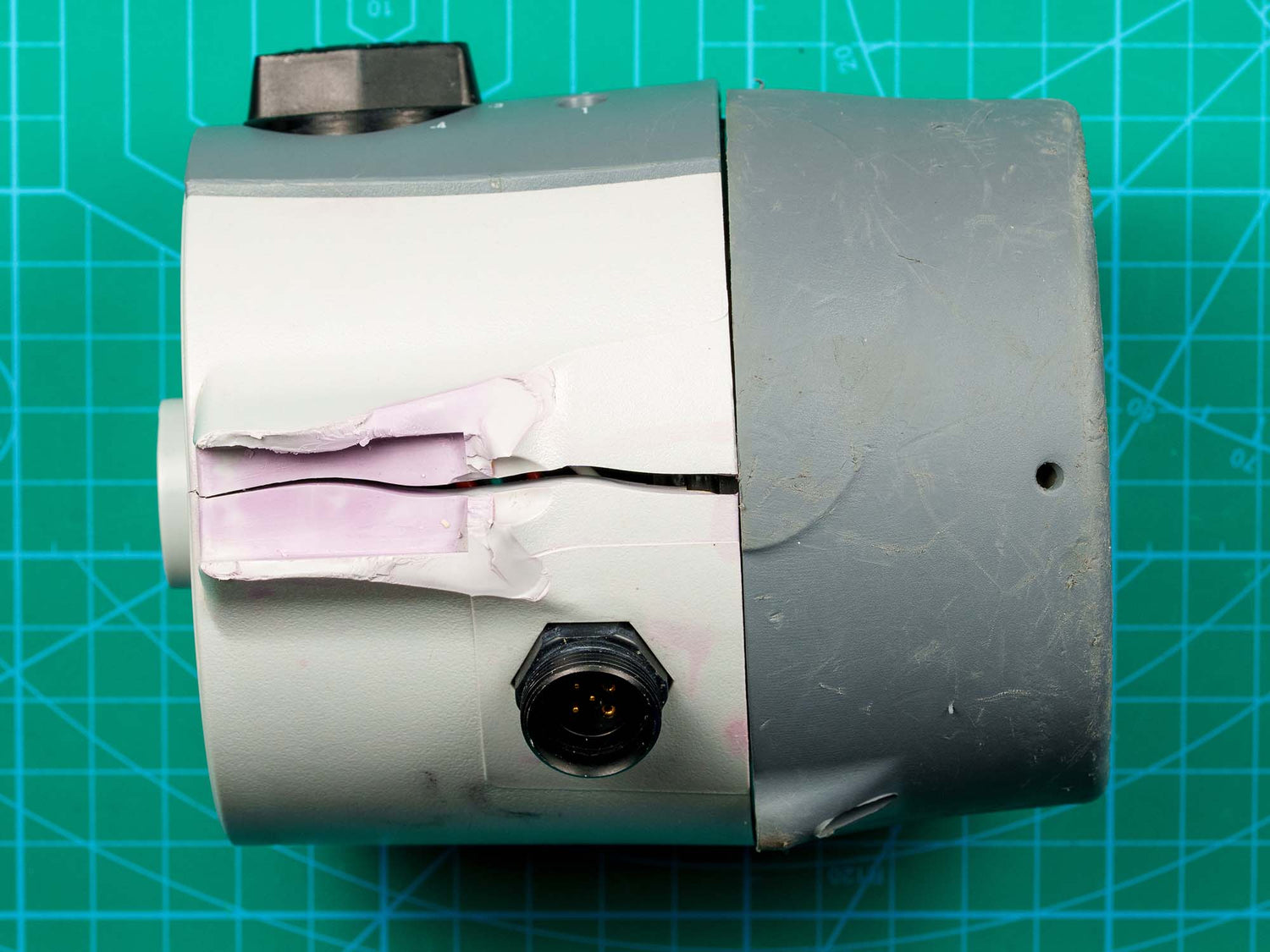
While ABS-PC is wonderfully low-maintenance in many ways, it is essential to avoid contact with glues, solvents, and cleaning products that causes it to break down. Classic signs of a chemical interaction are crazing (fine micro-fissures), brittleness, and cracking.

Loc-Tite is devastating for plastic compounds. The pink coloration is from the red Loc-tite interacting with the gray ABS-PC plastic.
What to Do
If you have already applied Loc-Tite to the threads of your ball mount screw, we highly recommend returning your strobe to us to have the body replaced.
It is most economical to have your strobe serviced before disaster ensues. The interaction will worsen over time, particularly when the strobe is subjected repeatedly to water pressure at depth. Even a very small crack can let water seep into the front of the strobe and damage its electronics irreparably.
SEE MORE: Sending products in for Service + Repairs

Tightening a Ball Mount
It's amazing how quickly the vibrations of airplanes and dive boats can loosen the hardware of your underwater photography gear. It is necessary to tighten all hardware to manufacturer specifications and periodically check tightness during use.
There are a couple of other things to keep in mind when tightening the ball mount on your strobe.
First, check if you have an Anti-Vibration Pad installed. The ball mount should slide into the strobe body very snugly and should not exhibit any movement prior to attaching the screw.
Second, tighten the screw firmly but not the tightest you can possibly get it. It is possible to accidentally crack the strobe body if you go crazy on it.
SEE MORE: Installing the Anti-Vibration Pad

Plastic-Safe Threadlockers
There are threadlocking products on the market that advertise themselves to be plastic-safe. Are they really safe? It can be an expensive experiment for you to perform.
We do not endorse the use of any commercially available threadlocker on our products. Please avoid using any kind of solvent or chemical to ensure a lifetime of trouble-free performance.
NEED HELP? Contact us with any questions.
Additional Reading
Stop Doing This to Your Strobe Battery Pack! [VIDEO]
Cleaning a Strobe Battery Toggle Lock [VIDEO]
TTL Testing and Troubleshooting
![Canon RF 7-14mm Fisheye Setting It Up // Ikelite Underwater Housing [VIDEO]](http://www.ikelite.com/cdn/shop/articles/Set_Up_Canon_RF_7-14mm_Fisheye_Blog_Cover_838c961f-0ed3-4e78-aafa-b906cf5db8f4.jpg?v=1776430264&width=2000)
![YOUR QUESTIONS: Finding a Port, Packing Your Gear & More!! [VIDEO]](http://www.ikelite.com/cdn/shop/articles/ikelite-socials-faq-video-blog-cover_2ca7e9c5-e948-4323-8f50-f8b161ab69ab.jpg?v=1778850965&width=2000)
