

By Jeff Milisen
Anyone who has been to the Philippines likely remembers it for lovely people, fantastic diving, and, to the Western mindset, a culture built around functioning insanity. For example, their seagoing vessel of choice is called a “bangka,” which is a lashed-bamboo trimaran. To start a bangka, you might hear “1, 2, 3!” as several people pull-start a borrowed diesel truck engine. The drive shaft exits the hull through a short length of bamboo that swells into a mechanical seal around the shaft spinning in the seawater. It is good enough to keep some of the water out.
During our 4-hour van ride north from Cebu, I couldn’t help but notice that the traffic had been engineered in a similar vein. There are no traffic lights and, as far as I could tell, no traffic laws. It sounds like a recipe for spectacular car accidents, and yet somehow it all just works. The chaos guards one of scuba diving’s gems, because there’s nowhere quite like the island of Malapascua and its highlight: thresher sharks!

Scopas tang fish // Sony a7CR + Sony FE 100mm F2.8 Macro Lens • 1/160 • f/11 • ISO 400 © Jeff Milisen
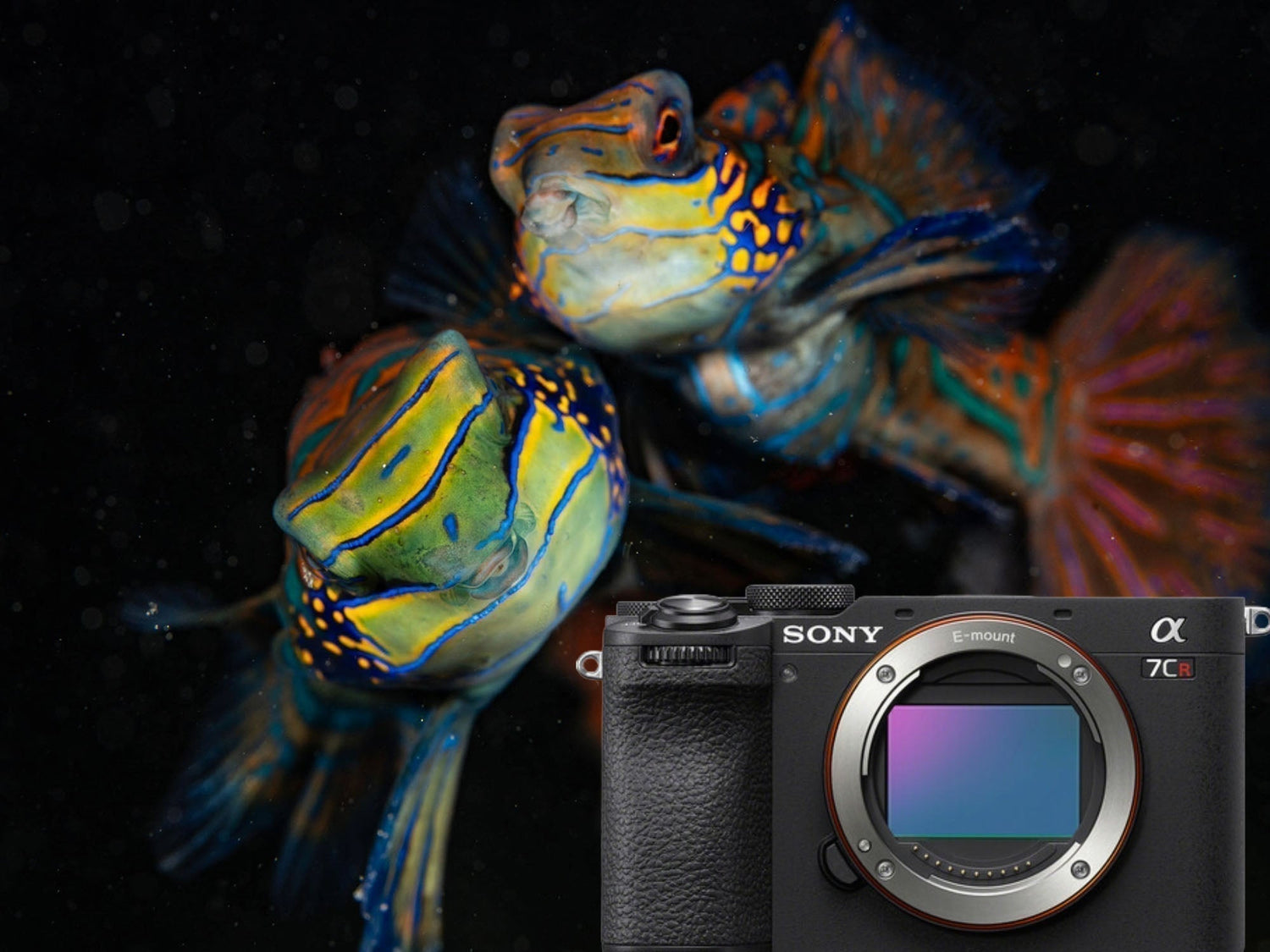
Malapascua is more than just thresher sharks. The tiny island north of Cebu was the setting for my honeymoon. I met my wife, Sarah, on a dive boat and, like any good romance movie, we both thought the other was arrogant and could barely stand each other. Thirteen years later, we were crossing the channel to once again play on an island that has become something of a second home. This wouldn’t just be a sentimental return, however, it was also a proving ground for a new camera: the compact, full-frame, 61 megapixel Sony a7CR.

Filefish // Sony a7CR + Sony FE 100mm F2.8 Macro Lens • 1/160 • f/10 • ISO 5000 © Jeff Milisen
Small Size, Big Impact
Every piece of electronics is getting smaller these days, and it is a trend I can get behind! When I first assembled it, Sarah and I noted that it looked like I had traded down to a compact camera. If you’re used to shooting DSLRs or even the latest mirrorless, this is going to be a shocker. By the time we arrived, we quickly saw the advantages such a small camera afforded me. The A7CR is only marginally smaller than most other mirrorless cameras, but that means Ikelite can stuff it into a DLM housing that feels minuscule compared to my usual rig. A smaller housing has obvious advantages for travel when trying to shave every possible ounce or find room for a second outfit. My whole setup (and extra clothes) fit into my carry-on.

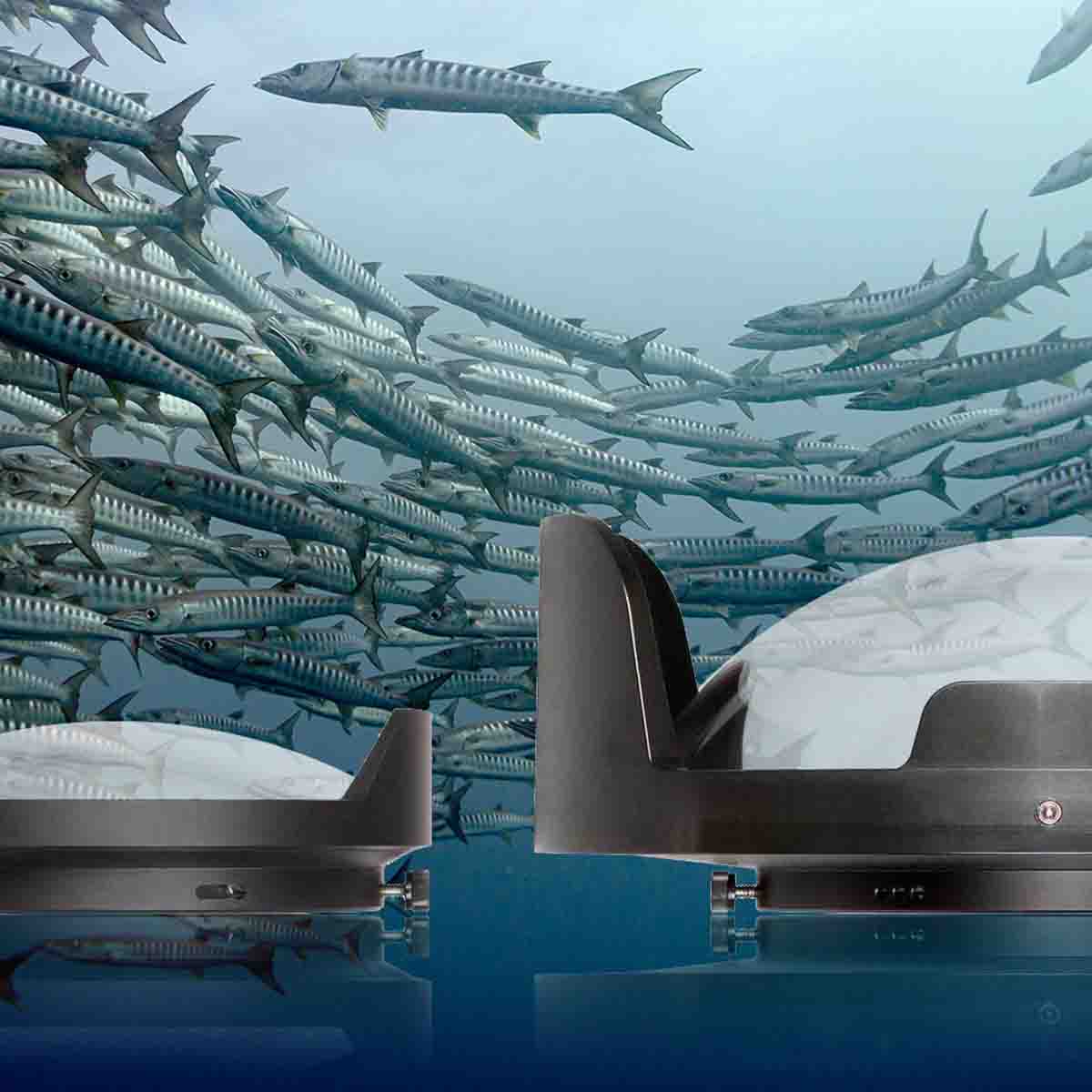
The Sony a7CR can be accommodated by either the smaller 200DLM housing (left) or the 200DL housing (right). The compact DLM style housing is a great option for traveling underwater photographers, but both options offer advantages. If you're looking to shoot the Sony a7CR and need guidance on which housing to choose read Choosing an Underwater Housing for the Sony a7C II or a7CR.
One thing I didn’t consider was how much easier it would be to dive with. The diving at Malapascua requires transiting from the shop, across a beach, onto a home-built water taxi, which then shuttles you to the bangka sitting offshore. Each of those touchpoints was made significantly simpler with the smaller camera.

Nudibranch // Sony a7CR + Sony FE 100mm F2.8 Macro Lens • 1/160 • f/16 • ISO 250 © Jeff Milisen
The Learning Curve
The moment I turned 40, Sarah diagnosed me with crippling technical incompetence. The place I see it the most is with new camera technology. Every time I handle a camera for the first time, it takes a few wasted photo shoots to realize that the LCD screen is set to “unusable” or that there is a menu button that tells the focus to lock onto the nearest rock. I once called Ikelite only to learn I had bumped a button that turned my TTL off.

Purple sponge // Sony a7CR + Sony FE PZ 16-35mm F4 G Lens at 16.5mm • 1/160 • f/11 • ISO 100 © Jeff Milisen
Then I took the A7CR underwater on a local shore dive for the first time. Three dials were each logically dedicated to shutter speed, F-stop, and ISO, and the camera focused immediately on a shark hunting the baitball. A 61MP full-frame camera has no business being this straightforward!

Filefish // Sony a7CR + Sony FE 100mm F2.8 Macro Lens • 1/160 • f/16 • ISO 160 © Jeff Milisen
Low Light Performance
Finding thresher sharks in Malapascua means meeting your boat at 5 am, leaving the lights and strobes off, gearing up with the sunrise, and stretching the low-light performance of your camera to its limit. This is where the optical advantage of a full-frame sensor really shows its stuff. Once upon a distant time, high ISOs were equated with grain as the sensor struggled to find missing details and made-up textures that weren’t there. Some of my best shark pics were taken at an ISO of over 4000, and I’ve seen some people catching usable images up to 12,500 and more!
More than image noise, one of my previous issues with mirrorless, and specifically Sony mirrorless, had to do with focusing in low light. This camera was a large step in the right direction. It had no problem finding the eyeballs of sharks that my eyes could barely make out, and even zeroed in on blackwater subjects a few days later at Bohol!

Thresher shark // Sony a7CR + Sony FE 100mm F2.8 Macro Lens • 1/160 • f/8 • ISO 4000 © Jeff Milisen
Megapixel Power
Because it is one of the only places in the world to reliably see threshers, they tend to dominate the discussion around Malapascua. However, the nearby waters also host some of the best Filipino diving. You can see this in sites like Gato Island or Deep Rock, where the guide merely waves their metal rod over a random spot of rubble to uncover cuttlefish, seahorses, frogfish, and so much more. With 61 megapixels at its disposal, macro is the A7CR’s party piece. In my family, I am the fish nerd, and Sarah is the nudibranch aficionado. I would normally never advocate for heavy cropping in post-production, but the crisp 100mm lens and excessive megapixel count allow for a more liberal application of the magnifying tool. This means you can zoom in on the rice-grain that Sarah claims is a nudibranch, or, my favorite, keep your distance while shooting that skittish fish. This kind of resolution changes how you shoot underwater: get close, then get closer, and with this setup, get even closer in post!

Sea krait // Sony a7CR + Sony FE 100mm F2.8 Macro Lens • 1/160 • f/11 • ISO 320 © Jeff Milisen
The caveat here is that the file sizes are getting a little out of control. When I first got the camera, I was stoked to have such early success with a camera and wanted to brag a little. I tried sending a pic to Ikelite, but the jpg was almost 40MB! My NAS backup (which is 11 terabytes) was thankful when I returned the tiny camera from whence it came. Between the huge raw files and 4K video, I was filling it up quickly.

Ghost pipe fish // Sony a7CR + Sony FE 100mm F2.8 Macro Lens • 1/160 • f/11 • ISO 160 © Jeff Milisen
Strobes with Built-In Video Lights
I am here to review a camera, but there was another piece of equipment that deserves some love. At its most basic level, photography is recording light. Strobes create light where there isn’t any, or bright natural colors to otherwise blue subjects. The directionality and properties of the light create moods and highlight subjects in a composition, and yet strobes are often overlooked. This trip gave them a chance to shine. I’ve known the higher-end strobes had built-in video lights ever since my first Ikelite DS161, but I hardly used them.
Flash forward and the DS232 hybrid strobes really saved my butt on this trip. I was on an evening dive at Epic House Reef when my 15,000-lumen video light battery died. I turned the built-in video lights for both strobes on and went straight back to work. Curious and encouraged, I even shot some video with them! It is always fun to find an under-appreciated feature come in handy and saves the dive!

Underwater photographer and Schooling Jacks // Sony a7CR + Sony FE PZ 16-35mm F4 G Lens at 16mm • 1/250 • f/11 • ISO 125 © Jeff Milisen
In Conclusion
As the years wore on, Sarah and I eventually grew from barely tolerating each other to standing at the altar together. Sony and my ineptitude have had a similar personality conflict. Sony cameras are complex machines assembled by a global tech giant that balance on the edge of what’s possible. I, meanwhile, ham-fist my way through learning about cameras, and the result is usually disappointment. Thus, the A7CR feels like a reset in my relationship with new technology. It is small, easy to use, and it produces incredible images in all kinds of conditions.

Artificial Reef // Sony a7CR + Sony FE PZ 16-35mm F4 G Lens at 16mm • 1/160 • f/11 • ISO 125 © Jeff Milisen
Get the Gear
- 200DLM/A Underwater Housing for Sony a7CR Deluxe Version # 69124-DLX
- Sony FE PZ 16-35mm F4 G Lens
- Sony FE 100mm F2.8 Macro Lens
- DS232 TTL Underwater Strobe with Video Light [Electrical Bulkhead] # 40232
- DL2 DS Link Sony TTL Converter # 46043
Additional Viewing
Choosing an Underwater Housing for the Sony a7C II or a7CR
Sony a7C II & a7CR // DL vs DLM Ikelite Underwater Housing [VIDEO]
Sony FE PZ 16-35mm F/4 G Lens Underwater Photo Gallery
Sony a7C II & a7CR Setting It Up // Ikelite 200DLM/A Underwater Housing [VIDEO]
 Ambassador Jeff Milisen is an internationally acclaimed underwater photographer who has specialized in blackwater photography since 2009. He is a recent addition to the Ikelite ambassador team. His upcoming book, a Field Guide to Blackwater Diving in Hawaii, will help both newbies and seasoned blackwater veterans identify the strange animals they encounter. He currently shoots with a Canon EOS 7D Mark II and dual Ikelite strobes. Read more...
![Canon R6 III Underwater Footage from Florida Keys [VIDEO]](http://www.ikelite.com/cdn/shop/articles/results-canon-r6-iii-blog-cover_cba00f0c-ec95-46c6-bbf7-932d6b29cefb.jpg?v=1782479274&width=2000)
