


![Full Frame or Crop APS-C Sensor for Underwater Photography? [VIDEO]](http://www.ikelite.com/cdn/shop/articles/ikelite-apsc-cameras-underwater-photography-steve-miller-blog-cover_442a62a7-e17e-4fcf-92e8-ede70c2139dc.jpg?v=1775221969&width=1500)
Featuring Steve Miller
We're living in a golden era of digital photography. Image quality has never been better, whether you're shooting a full frame or crop sensor APS-C format mirrorless camera. Steve Miller has over 100,000 underwater images in his Lightroom library and it turns out that the vast majority of them were taken with APS-C crop sensor cameras. Steve breaks down the reasons why more isn't always better, and why sometimes to get the shot you need to streamline.
If you prefer reading, scroll down to view the article version of this video.
APS-C for Underwater Photography
We get a lot of questions here about sensor sizes: APS-C, four thirds, full frame. I have over 100,000 images in my underwater library, and the majority of them have been shot with APS-C. But to be honest, I would have to go and look at the metadata to tell you which were which because they're so close in quality. So let's talk about why most of the images I shoot are using an APS-C sensor.
Using an APS-C Camera in Real Life
I was on a boat one time where I had both full frame and APS-C cameras available. I had my full frame system all assembled ready to go, and I had my crop sensor all ready to go. We knew that the dive was going to be very fast. In and out of inflatable boats and chasing dolphins. I chose the APS-C system for that dive because there's some beautiful wide-angle lenses like the Canon 10-18mm that you can put on a crop sensor.
But the difference was that the housing, and the system itself, became so much smaller and easier to maneuver through the water that I was able to get images that I don't think I would have been able to get with the full frame camera that I had left up on the boat. So physical size will sometimes allow you to get shots that you couldn't get with a bigger system.

Underwater, maneuverability is often more important than sensor size, especially when it comes to shooting fast moving animals. // Shot on an APS-C camera with a fisheye lens at 10mm. © Steve Miller
APS-C Field of View
From an imaging standpoint, the APS-C sensor will give you a more magnified image. Let's say you're shooting macro for example, you're going to be able to fill the frame with that nudibranch or that small reef animal without having to get as close with an APS-C. In other words, it makes your lens longer, and this is definitely a benefit for macro. Now you could argue the flip side happens with a full frame, since a full frame wide lens is going to give me a slightly wider angle of view than I could get with an APS-C camera. But there are so many great lenses including fisheyes that are made for the APS-C that it's almost moot.

Using an APS-C camera provides an advantage for macro shooters since APS-C sensors have higher effective magnification than full frame cameras, helping you to fill your frame with even the smallest subjects. // Shot on APS-C camera with a rectilinear lens at 100mm © Steve Miller
Adding Underwater Strobes
One of the other things to think about if you choose an APS-C system is that the lenses are less expensive and the cameras, or in some cases the housing are less expensive. So you could find yourself with enough money left over to add strobes to your system. At that point your system's going to be more versatile, and in most cases you're not going to notice a difference between the smaller sensor size.

One of the best investments you can make in your underwater system is adding quality lighting. Strobes bring color, contrast, and clarity to your underwater images. © Bluewater Photo Store
The Difference Light Makes
When you add light, that's where your clarity, that's where your detail and your resolution, all the textures and the colors, are going to come from. It's going to come from the strobe light, so putting light on an APS-C camera is going to give you much more detail and color than shooting natural light with any full frame camera.
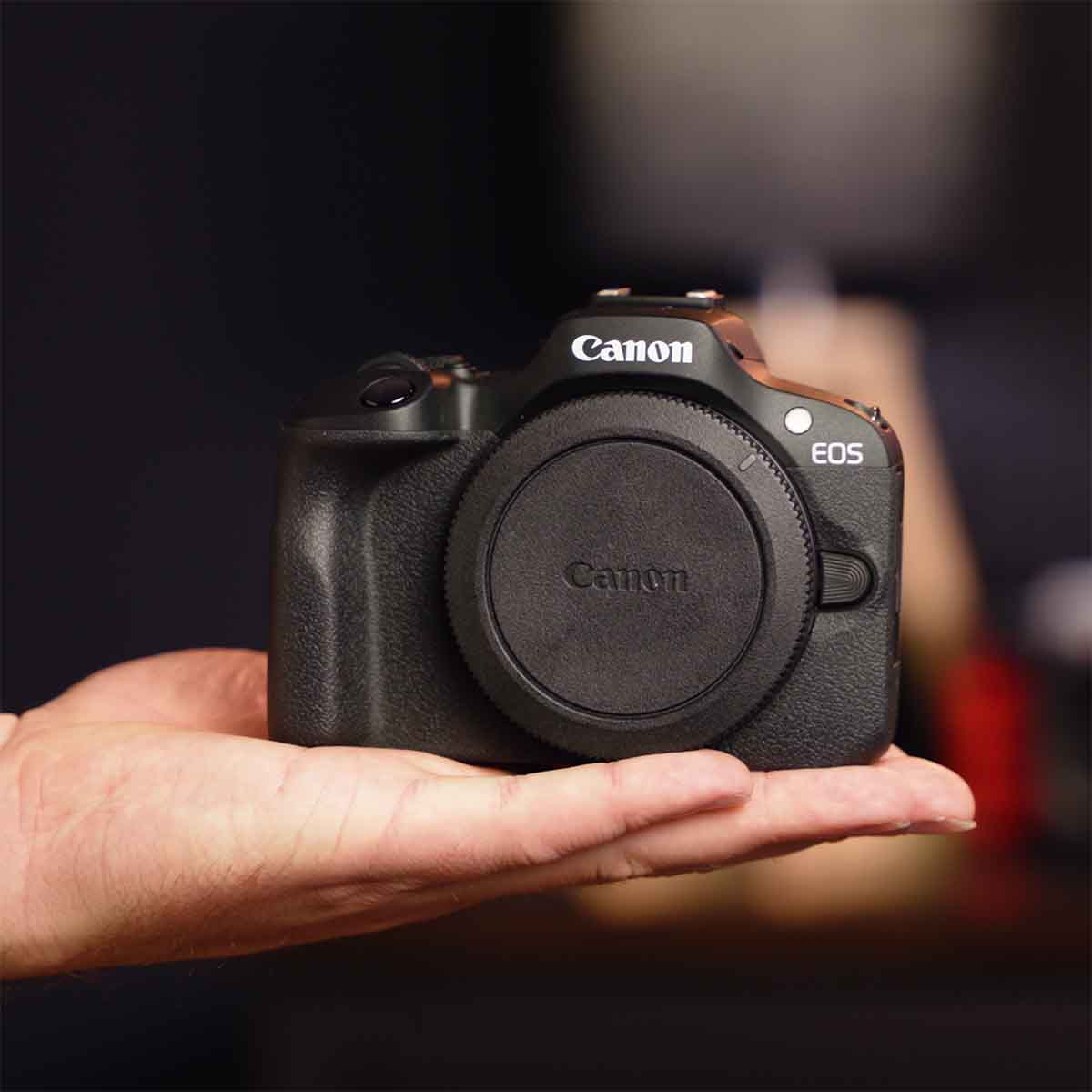
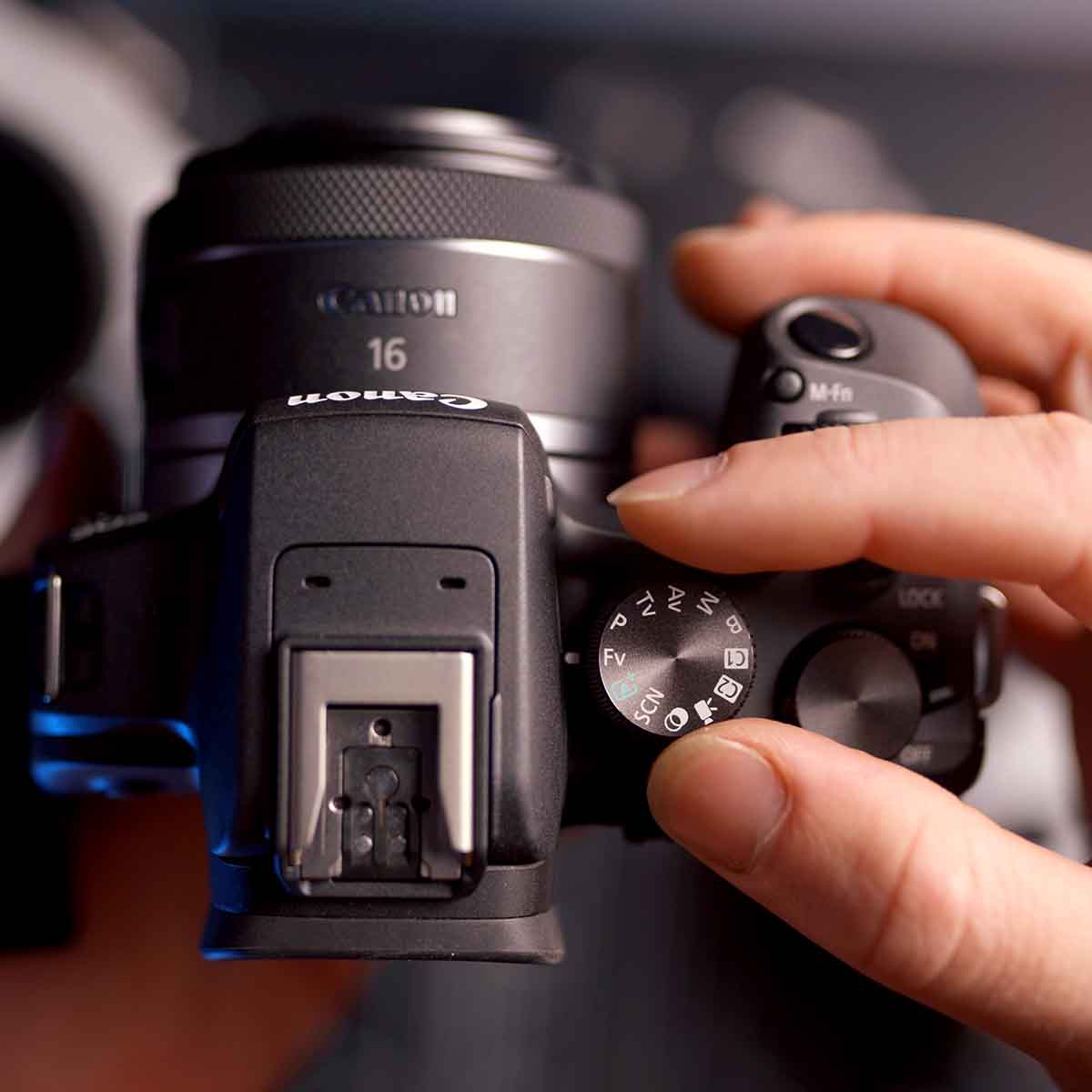
We've seen so much good photography coming out of these crop sensor cameras over the years that in some cases we'll even offer complete packages for you with the camera, housing, ports, everything. Some of the real popular ones would be the Canon R7, the Canon R10, and even the Canon R100. If you're a Sony shooter, the a6700 is a very, very popular choice for underwater photography.
Steve's Recommended APS-C Underwater Photography Systems
- 200DLM/D Underwater Housing, Canon EOS R100, and 18-45mm Lens Kit # 69753
- 200DLM/D Underwater Housing, Canon EOS R10, and 18-150mm Lens Kit # 69745
- 200DLM/D Underwater Housing for Canon EOS R7 # 69746
- 200DLM/E Underwater Housing for Sony Alpha a6700 # 69123

A few of our favorite APS-C cameras: we recommend the Canon R7, Canon R10, and Canon R100 cameras, and for Sony shooters the a6700.
At the end of the day, it's all about getting the shot, and when we talk about all the things that go into getting the perfect shot, the sensor size really has very little to do with it. Keep in mind also that pricing out an APS-C system could save you enough on your total investment to take another dive trip, and that's where our images come from, so it's something to think about.
If you have any questions about this, feel free to reach out to us.
Additional Viewing
Why You Need Strobes Underwater
The Best Lenses for Canon APS-C Cameras Underwater RIGHT NOW! [VIDEO]
Canon R10 vs R7 // Best Crop Sensor for Underwater Photography [VIDEO]
The Most AFFORDABLE Pro Quality Underwater System // Canon EOS R100 Housing [VIDEO]
Rectilinear vs Fisheye Lenses for Underwater Wide Angle Photography [VIDEO]
 Ambassador Steve Miller has been a passionate teacher of underwater photography since 1980. In addition to creating aspirational photos as an ambassador, he leads the Ikelite Photo School, conducts equipment testing, contributes content and photography, represents us at dive shows and events, provides one-on-one photo advice to customers, and participates in product research and development. Steve also works as a Guest Experience Manager for the Wakatobi Dive Resort in Indonesia. In his "free" time he busies himself tweaking his very own Backyard Underwater Photo Studio which he's built for testing equipment and techniques. Read more...
![My Freshwater Ikelite System for Sony a7CR with Ecko Strobes // Bill Hawthorne's Underwater Photography Gear [VIDEO]](http://www.ikelite.com/cdn/shop/articles/ikelite-florida-springs-photo-gear-bill-hawthorne-blog-cover_c48579c2-9ac6-4bb0-87d5-57a37232d8a8.jpg?v=1774617958&width=2000)

