




By Andrew Raak
I was thinking of starting this article with a silly surfer pun: Hang Ten into Surf Photography, Surf’s Up Shooting, or Cowabunga Camera Settings, but then I thought that was stupid. So, besides a catchy title, what does an underwater photographer who is used to shooting reefscapes and fish need to know about surf photography?

© Andrew Raak
Know the Rules
The best place to start is actually not behind a camera but on top of the board itself. I highly recommend learning your subject before you brave the water with your housing in hand. A simple surf lesson will teach you many things about the subject you’re hoping to capture with your camera. Vital information like where a surfer takes off from, the peak of the wave, the direction of travel — the lesson will give you an understanding of what it takes to just paddle out into the waves.

Also, one of the most important things to know is the culture surrounding surfing. There are sometimes ethical responsibilities that go along with protecting surf breaks from being photographed and shared in a public space. So, as Sterling Spence says, “know da rulez” of the surf break you’re hoping to capture by speaking with a local. There’s a chance that you’re not welcome to shoot a specific break to protect the waves from tourists.

Start Small
My journey in surf photography started at a surf camp organized by Surf City Surf Shop in Myrtle Beach, SC. At the time I was still a kook (a joking term given to a new surfer), but helping run and organize a kids’ surf camp helped me learn the culture. To the kids surfing these knee-high waves, this was on par with their wildest dreams of surfing like the greats. To the realist inside me, this was a glorified babysitting gig where I got to share my stoke of surfing with the next generation of little rippers.

© Andrew Raak
One day I decided to bring out my Ikelite housing and try to snap some pictures to capture the energy of the camp. After a lot of experimenting, I managed to nail some shots, and from there I knew I had a ways to go. From that, I started swimming out with friends along the Hammock Coast, fine-tuning my shutter speed to freeze the action. It wasn’t until I started surfing and shooting in Hawaii that I felt like I had captured some meaningful images.
A photographer who decides to shoot surf will mirror a person learning to surf. The ocean, being the great equalizer that it is, will humble you again and again. So whether you are learning to shoot or learning to surf, it’s best to start on small waves and slowly progress wave after wave.

© Andrew Raak
Surf First, Shoot Second
In order to shoot a subject, we must first learn the subject we’re shooting. Oftentimes we have great dive guides to tell us about animal behaviors to look for, where to find certain reef creatures, and they can also keep an eye on changing dive conditions. But surf photography is a high-pumping, adrenaline-filled sport dedicated to riding an unpredictable wave that crashes onto the shoreline. So, the best thing to do is learn to surf first and then shoot second.

© Andrew Raak
Any good surf instructor will first teach you the etiquette of surfing. A few key takeaways are who has the right of way on the wave — the surfer with priority is closest to the peak of the wave; everyone else must give way to that surfer. Know your limits and how to keep yourself safe. Many point breaks have a channel that will be a safe zone away from a breaking swell, but with shore breaks, a surfer must push through the white water of the crashing waves to reach a reprieve from the pounding surf. An understanding of surf culture is also important — respecting the locals and protecting their surf spots.

© Andrew Raak
Safety is Paramount
Going to a surf camp or lesson will give you an opportunity to understand the dynamic motion of surfers jockeying for position on a wave, allowing you to position yourself in the line of sight to nail the shot. Surf photography is not for the faint of heart; you must be a superior swimmer and knowledgeable surfer to shoot beyond the shoreline. Safety is also a priority in what I wear when shooting. A surf helmet is a must, along with a set of bodyboard fins, and I like wearing a slightly positive open-celled neoprene wetsuit.
At the local surf camp in the Carolinas, knee-high rolling waves and 80lb children on foam-top surfboards seemed less extreme than the double-overhead barreling reef breaks in Hawaii that I would shoot later in my career.

© Andrew Raak
Safety should always come first before you paddle or swim out with a camera. Just as you wouldn't begin a dive without checking your gear and making sure everything is secure, it's important to be honest about your ability in the surf.
Start by assessing your water confidence. Can you comfortably swim in the conditions you plan to shoot for an extended period? If not, wait for smaller surf or spend more time building your confidence before taking a camera into the water.
Unlike some other types of water photography, using flotation isn't always practical in the surf. To stay safe and avoid getting pushed around by breaking waves, surf photographers often need to duck dive beneath incoming waves. Learning how to move efficiently through the surf can make shooting both safer and more enjoyable.

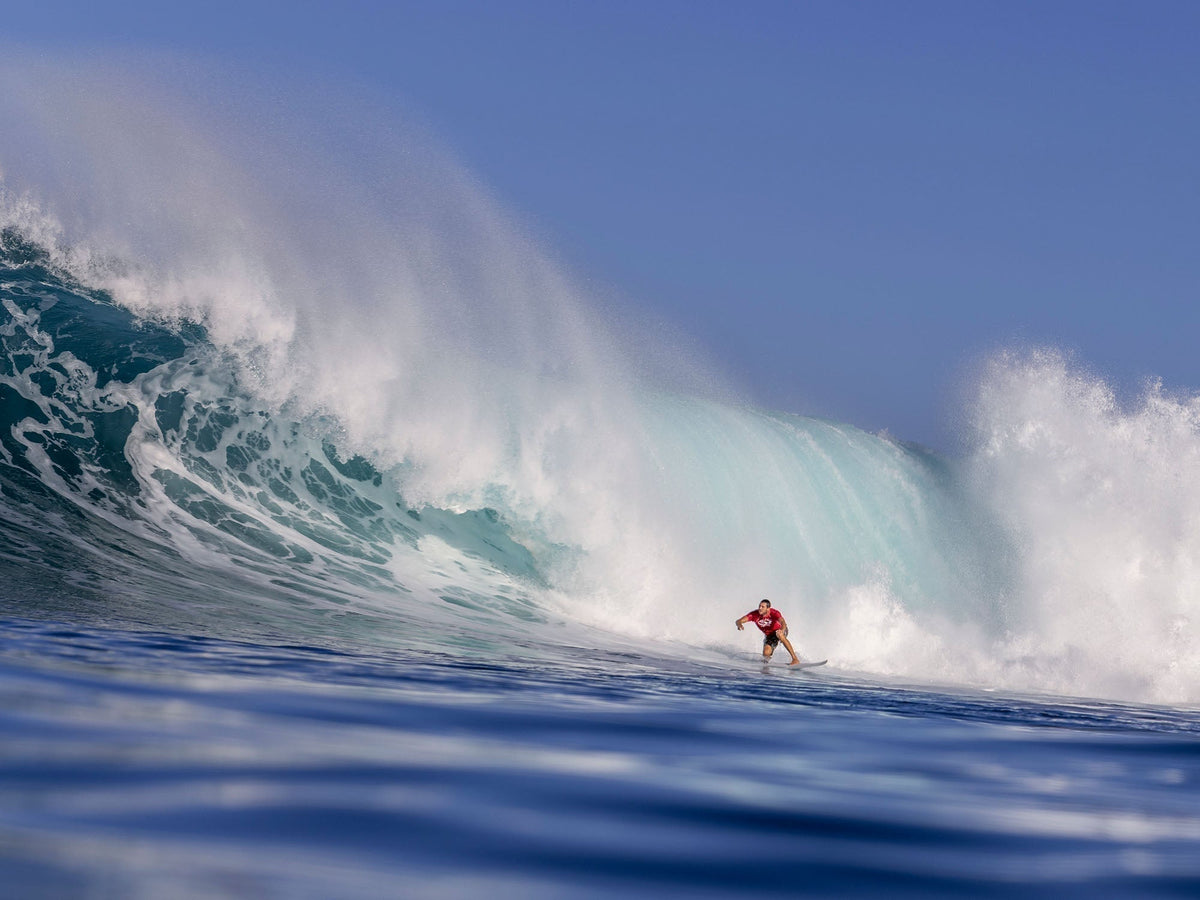
A tip I’ve adopted is to wear my Cressi 5mm open-celled freediving top so I can achieve slight buoyancy at the surface. This would also, in theory, allow my unconscious body to float if hit in the head with a board or during a shallow-water blackout if held down too long by huge surf. Wearing a surf helmet should be a required piece of equipment regardless of whether the surf that hits you is an 80lb child in knee-high surf or a local pro ripping down the face of a 10 foot (3 meters) wave going 25 mph (40 kph).
As far as propulsion goes, a set of boogie-boarding fins with snug straps and neoprene socks will allow you to swim faster and keep them from being knocked off your feet in a wipeout. A boogie board wrist strap is always a good idea to attach your camera to your wrist should a wave knock it out of your grip. Finally, a buddy system should always be exercised in one way or another — typically, my buddy would be a friend that I’m shooting in the surf that day.

© Andrew Raak
Camera Settings for Surf Photography
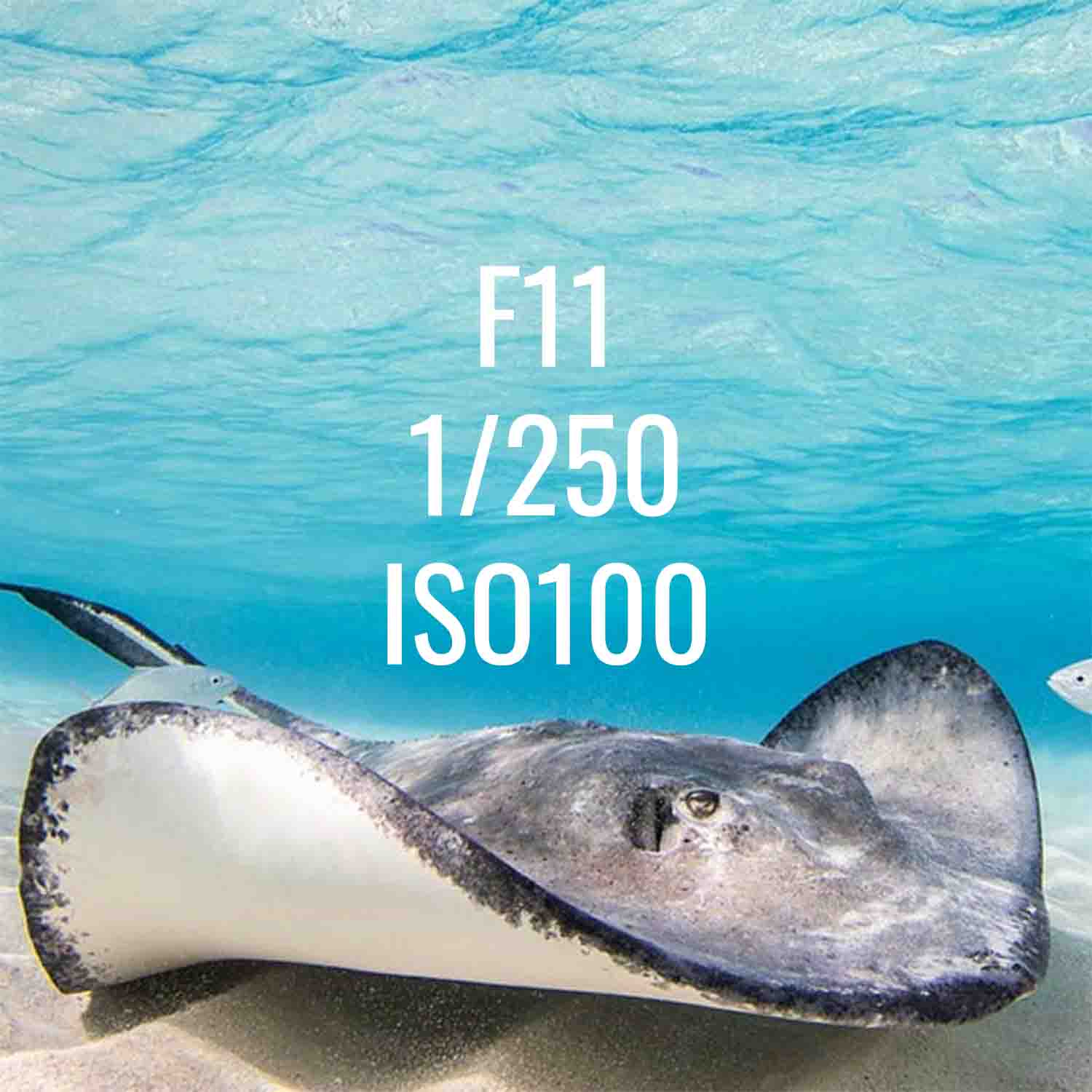
Dialing in your camera settings will dictate the image you’re trying to shoot. To capture clear, crisp images, you should be shooting at a fast shutter speed. With natural light, you’ll want to open the aperture to a wider setting to increase the speed of your shutter and then boost your ISO to compensate. When metering your exposure, you might want to balance a stop underexposed to compensate for the bright white sea foam that you’ll need to balance within your camera’s dynamic range abilities. Remember, it’s easier to brighten an image and retain pixel quality than to darken highlights that are often lost with overexposure.

© Andrew Raak
Lens Selection for Surf Photography
Lens selection can also be challenging for a beginner. The golden rule of underwater photography — being close to your subject — does not apply here unless you’re comfortable riding the falls of a breaking wave as a surfer whizzes past you in a wide-angle image. My favorite lens to shoot is a 100mm lens so I can set up a comfortable distance from a surfer down the path where the surf will be. As the surfer and breaking wave approach, I can duck dive under the wave and exit through the back safely without tumbling into the shoreline.

© Andrew Raak
A well-polished flat port is also a great choice, as domes will be more prone to forming water droplets. A natural water repellent like baby shampoo, spit, or in some cases a pre-polished wax that has been buffed off the front of the port will help repel water off the lens.
For video shooting, don’t be shy about using Tv Priority Mode and doubling your frames per second to achieve a realistic effect.
Andrew's Surf Photography System
- Canon EOS R5 Camera
- Canon RF 100mm F2.8 L Macro IS USM
-
200DL Underwater Housing for Canon EOS R5 # 71764-DLX

© Andrew Raak
Additional Viewing
Dealing with Droplets when Shooting Split Shots
Shooting a Surf Documentary in the Great Lakes with Matt Wagner [VIDEO]
Featured Customers | Mati Olivieri Surf and Scuba
Featured Customers | Cy Scammel PNW Protectors Go Surfing
Gigantic Manta Rays Spotted in South Carolina [VIDEO]
Creature Feature: Scaly Tailed Mantis Shrimp [VIDEO]
 Ambassador Andrew Raak always dreamed about making a life on the water, and he has made it a reality. Andrew has a degree in Marine Science, a Captain's license, and is a certified dive instructor. At the moment he spends his days on the boat in Hawaii, when he's not traveling the world and teaching underwater photography. Read more...
![How to Take a Great Octopus Photo [VIDEO]](http://www.ikelite.com/cdn/shop/articles/photographing-ocotpus-video-blog-cover_115e10bb-9b0c-4225-b074-b7b267540a35.jpg?v=1787925930&width=2000)
![What to Expect When Shooting Underwater at Night [VIDEO]](http://www.ikelite.com/cdn/shop/articles/DUPE_Night_Diving_1_1a6477c4-4074-40a7-bdaa-9ec243dc36b8.jpg?v=1789743906&width=2000)
